Songs & Playing
How to Play and Sing at the Same Time on Piano
Learn how to sing and play piano at the same time with this step-by-step beginner guide. Practical drills, common pitfalls, and real tips that work.
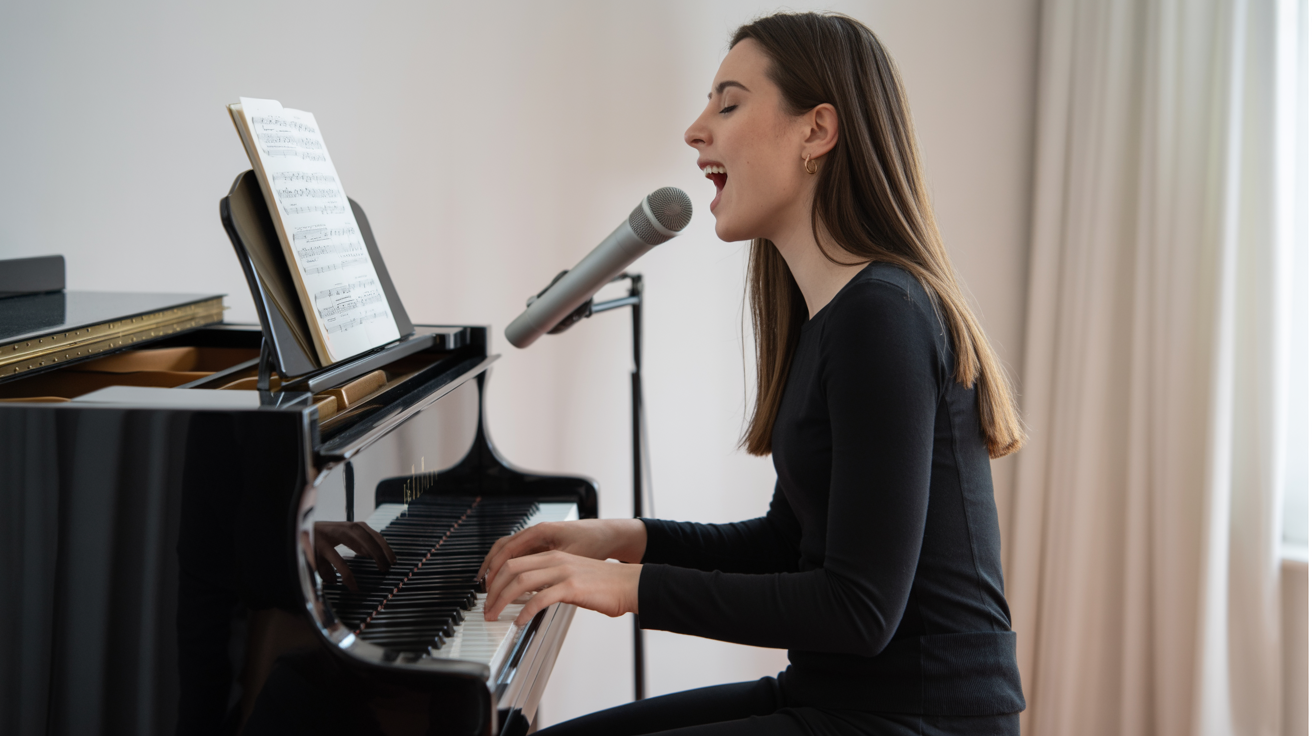
Most beginners find that they can play the piano reasonably well, or they can sing a song from memory, but the moment they try to do both at once, one of them falls apart. This is normal and it is fixable. The key is not to practice both things simultaneously from the start. You separate them, get each one solid, and then bring them together in small pieces. This guide walks through that process in a sequence that actually works.
Why Playing and Singing at the Same Time Feels So Hard
When you play piano, your hands are tracking two independent lines of music, your eyes may be reading notation, and your foot might be managing the sustain pedal. Singing adds another layer: pitch, words, breath timing, and a melody that often sits in a completely different rhythmic pocket than your fingers are playing.
Your brain handles this by automating whatever it knows well enough. A guitarist who has strummed the same four chords for years barely thinks about the chord changes. A singer who knows a song inside out doesn't consciously track every syllable. The problem for beginners is that neither the playing nor the singing is automatic yet, so the brain hits a ceiling trying to manage both consciously at once.
The fix is to lower the cognitive load on each side before combining them. That means getting the piano part close to automatic first.
Step 1 - Get the Piano Part to "Boring"
Before you try to sing a single word, the piano accompaniment needs to feel almost tedious to play. Not perfect in the technical sense, but automatic enough that you could talk while doing it.
A practical test: play your accompaniment pattern and try to recite the alphabet out loud at the same time. If you stumble on the piano, the part isn't automatic yet. If you can get through A to Z without the rhythm collapsing, you're in good shape.
For most beginners learning to accompany yourself on piano, the accompaniment is simpler than the melody. Think of a basic blocked chord in the left hand on beat one, or a simple two-note pattern that repeats. The simpler the piano part, the sooner you can bring your attention to the singing.
Two approaches to simplifying your left hand
Block chords: Play the whole chord on beat one of each measure and hold it. No arpeggios, no rhythm pattern. This gives you maximum attention for the vocal line.
Chord tones on one and three: For songs in 4/4 time, play the root of the chord on beat one and the fifth on beat three. It sounds a bit bare but it works as a starting scaffold.
Once singing while playing feels comfortable at the simple level, you can start adding back the fuller accompaniment you originally wanted.
Step 2 - Learn the Melody as a Piano Line First
Before singing the melody, play it on the piano with your right hand. This forces you to confront the actual pitches and rhythms in a concrete, measurable way. Many beginners discover at this point that they were slightly wrong about the melody in their head, which is much better to catch now than after your voice is also in the mix.
Play the melody slowly, without any left-hand accompaniment, until you could hum it accurately just from the muscle memory in your fingers. Then hum it while your right hand plays it. Then sing the words while your right hand plays it. You haven't added the left hand yet.
This step is essentially the same method you'd use to learn a new piano piece from start to finish: hands separate before hands together. Applying it to voice plus one hand is exactly the same logic.
Step 3 - Combine in Short Segments
Don't start by running through the whole song. Pick a four-bar phrase and put together just that section: left-hand chords plus voice. Practice it until it feels settled, then add the next four bars. This phrase-by-phrase approach avoids the situation where you can play and sing the first verse but fall apart in the chorus every time.
Within each segment, start very slowly. Slower than feels necessary. The goal at first is not to sound good. It's to get your brain used to tracking two things at once without one of them interrupting the other.
A useful drill for locking in the rhythm
Speak the lyrics in rhythm without singing and without playing. Just say the words in time, tapping your foot on the beat. Then add the left hand only while you speak the words. Then finally add the singing. This three-stage entry often helps players who find that their piano rhythm disrupts as soon as they open their mouth.
Step 4 - Handle the Breath and Phrase Timing
One thing that trips up singers who are new to accompanying themselves is breath management. When you're just singing, you breathe wherever the phrase naturally allows. When you're playing, you sometimes need your full attention on a chord change at exactly the moment you'd normally take a breath.
The solution is to plan your breaths intentionally when you first put the song together. Mark the score or a lyric sheet with a small "V" or check mark at each breath point. Make sure those moments are either easy piano transitions or a held chord where the left hand doesn't need to do anything complicated.
Songs that work well for early practice are ones where the vocal melody pauses slightly at phrase endings and the chord changes are predictable. Ballads with slow harmonic rhythm give you more room than uptempo songs where chords change every beat.
A Simple Practice Sequence Summary
| Stage | What You Do |
|---|---|
| 1 | Play accompaniment alone until it feels automatic |
| 2 | Play melody with right hand alone, then hum it, then sing it |
| 3 | Combine left hand + spoken rhythm (no singing yet) |
| 4 | Add voice to left hand, four bars at a time |
| 5 | Add the full two-hand arrangement once each piece is comfortable |
Work each stage until it feels settled before moving to the next. The timeline varies by song complexity and how much practice time you have, but rushing past stage three is the most common reason people feel stuck.
Choosing the Right First Song
The best songs for learning to play and sing at the same time have a few things in common:
- The melody mostly sits on chord tones (the notes that match the chord your left hand is playing), which makes pitch matching easier
- Chord changes happen on strong beats, so the timing is predictable
- The vocal phrases have natural rests where you can breathe and refocus
Traditional folk songs, hymns, and simple pop ballads tend to fit this profile well. Songs with syncopated melodies and complex chord changes are harder to combine, so hold those for after you've had some success with a simpler piece.
If you're still building your song library, looking at piano pieces by ear can help you find songs you already know well enough to sing comfortably, which removes one layer of cognitive load from the equation.
Frequently Asked Questions
How long does it take to be able to play and sing at the same time? It depends on the song and how comfortable you are with the piano part. Many beginners can put together a simple song with block chords in two to four weeks of regular practice if they follow the separation method above. Songs with more complex accompaniment take longer.
Should I memorize the piano part before I try to sing? For most beginners, yes. Reading notation and singing at the same time is an advanced skill. Memorizing the accompaniment so you don't need to watch the page frees up attention for your voice. Start with something short enough to memorize.
What if my singing goes flat when I start to play? This usually means the piano part is still taking too much conscious attention, which is pulling you away from tracking your pitch. Go back to stage two: sing the melody with just the right hand playing it alongside you, without any left-hand chord, until your pitch feels secure. Then reintroduce the left hand gradually.
Is it easier to play and sing if I use simple chords instead of a full arrangement? Yes, significantly. Stripping the accompaniment down to one chord per measure, or even one chord per phrase, lets you focus on staying in tune and keeping the lyric timing. You can layer in more complexity once the singing feels stable.
Does the type of keyboard matter for singing while playing? Not much, as long as the keys are responsive enough that you're not fighting the action. Playing on a keyboard with very stiff or very light keys can distract your attention from the singing, so a medium-weight action tends to be easiest for combined practice.