Songs & Playing
Your First Performance: Playing Piano for Other People
Playing piano in front of people for the first time? This guide walks you through preparation, managing nerves, and performing with confidence.
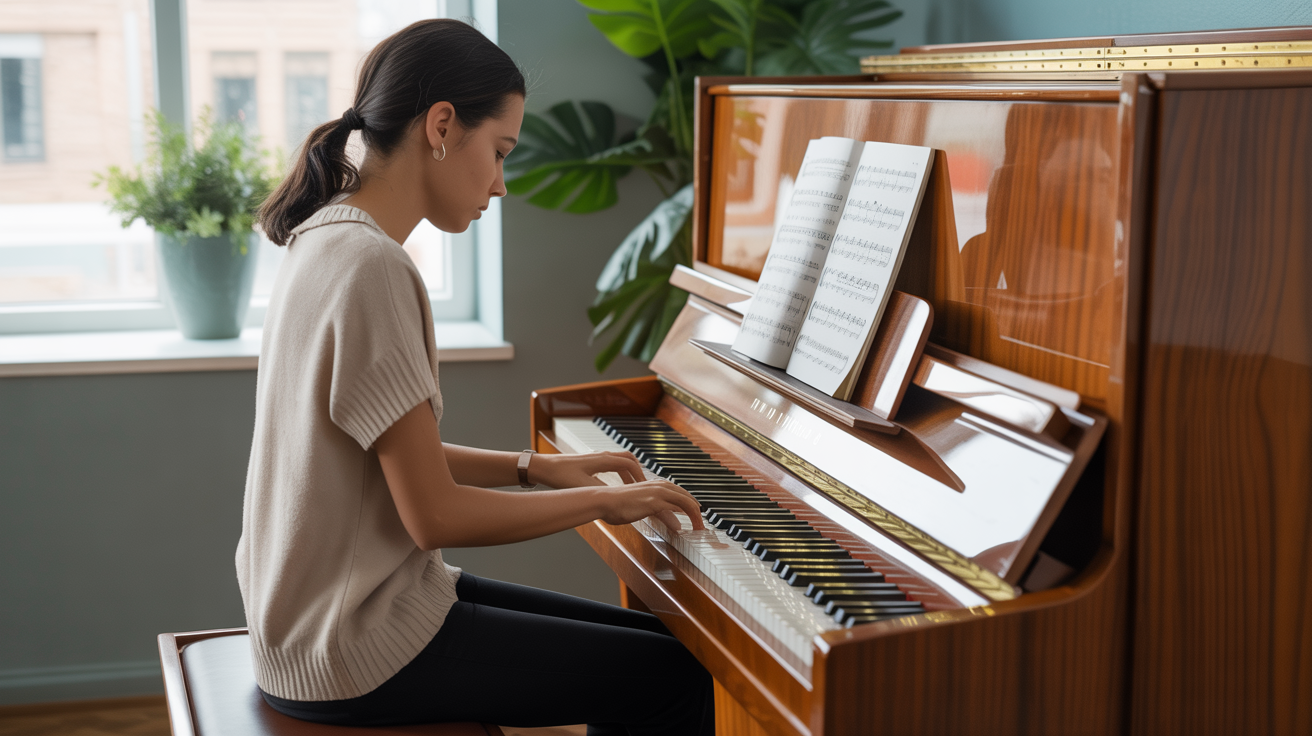
Playing piano in front of people changes the experience completely. The same piece you played cleanly alone can suddenly feel unfamiliar when someone is watching. That is not a weakness. It is a normal part of learning to perform, and the good news is that you can prepare for it directly.
This guide covers how to pick the right piece, build performance readiness in your practice, and actually get through your first time playing for others without falling apart.
Pick a Piece You Can Play Twice as Well as You Think You Need
The most common first-performance mistake is choosing a piece at the edge of your current ability. When nerves hit, a piece you barely manage in the practice room falls apart in front of an audience.
The better approach: pick something you have fully memorized (or can read very solidly), have played cleanly at tempo many times, and genuinely enjoy. If you feel a little bored with it, that is close to the right level.
If you are looking for solid first choices, easy piano songs for beginners has a list of pieces that are both learnable and audience-friendly. A recognizable melody helps listeners connect even if you play a wrong note.
How to Practice for a Performance, Not Just for Yourself
Normal practice and performance practice are different. Here is what to add once you have a piece learned:
Run-throughs without stopping. When you are preparing to perform, practice playing the piece start to finish without correcting mistakes. If you hit a wrong note, keep going. This builds the habit of continuing rather than fixing, which is exactly what you need in front of people.
Practice the moment before you start. Sit down, place your hands on the keys, take a breath, and then start playing. Do this every time you run through the piece. This trains the "beginning" as part of the performance so it feels familiar when it matters.
Record yourself. Video or audio. Then watch or listen without cringing, just observing. A recording reveals hesitations and timing issues your brain skips over in the moment. It also shows you that you play better than you think.
Practice in different environments. Play in different rooms. Use a different piano or keyboard if you can. The unfamiliarity of a new environment is a big part of performance nerves, and any variation in practice helps.
For more detail on how to take a piece from first notes to finished, how to learn a new piano piece from start to finish covers the full process.
What to Do With Performance Nerves
Performance nerves are physical. Your heart rate goes up, your hands may feel shaky, and your mind can go blank. You can not stop this from happening, but you can work with it.
Before you sit down: Breathe slowly and deliberately, in through the nose, out through the mouth. Four counts in, six counts out. This activates the parasympathetic system and lowers your heart rate. Do this for two or three minutes before you play.
At the bench: Before you place your hands, look at the keys for a moment. Find your starting position slowly. You are not stalling, you are grounding yourself in something physical and familiar.
During the piece: When nerves spike, your tempo often rushes. If you notice this, do not try to slow down dramatically mid-phrase. Just stay connected to the pulse you practiced. If you have spent time with a metronome, your body already knows where the beat is.
After a mistake: Do not stop, do not visibly react, and do not restart. Keep going. Most listeners do not know the piece as well as you do. A missed note followed by confident continuation sounds much better than a stumble followed by a visible frown or a restart.
The nerves usually drop once you are actually playing. The first four or eight bars are the hardest.
Types of First Performances and What to Expect
Not all first performances are the same. Here is a quick look at common scenarios:
| Setting | Audience | Pressure Level | Notes |
|---|---|---|---|
| Playing for a family member at home | 1-2 people, supportive | Low | Good starting point, low stakes |
| Informal friend gathering | 4-10 people, varied attention | Medium-low | Casual, people are talking |
| School or community recital | 10-50 people, quiet attention | Medium-high | Full attention, formal setting |
| Open mic or church performance | 20-100+ people | High | Bigger space, less forgiving acoustics |
Start with the lower-stakes options. Play for a sibling or a parent before you play at a gathering. Play a casual gathering before a recital. Each step gives you real performance experience without overloading you.
On the Day: Practical Logistics
A few practical things that matter more than you might expect:
Arrive early and touch the instrument. If you are playing somewhere other than home, you want to feel the keys before the moment arrives. Even five minutes of quiet playing beforehand helps.
Know the pedal. Sustain pedal feel varies a lot between instruments. Test it before you perform. A piano with a hair-trigger pedal after you have practiced on one with more resistance can throw off your timing.
Have a plan for starting over. Decide in advance that you will not restart unless something truly catastrophic happens (like a complete memory blank). Restarting is rarely as helpful as it feels in the moment, and it draws attention to the mistake rather than moving past it.
Tell someone what you are playing. If you are at a small gathering, introducing your piece briefly, just the title and maybe one sentence, gives your audience a frame and gives you a moment to settle.
Listen to your playing by ear in the room. If you do any improvising or have a good ear, how to play piano by ear is worth reading before you perform in an unfamiliar space. Rooms change how piano sounds.
After the Performance
Play, then let it go. Do not immediately catalog every mistake while people are still listening. There will be time to analyze what happened after.
Most audiences at a beginner performance are rooting for you. They came to hear you play. Accept the applause, say thank you, and give yourself credit for doing something that takes real courage.
The second performance is always easier than the first. And the tenth is easier still. The goal right now is to have one real experience of playing for others, even imperfectly. That experience teaches you more than any amount of solo practice.
Frequently Asked Questions
What is a good first song to play in front of people?
Choose something you have fully memorized or can read very comfortably, and that has a recognizable melody. Pieces from beginner repertoire books, traditional songs like "Fur Elise" (the opening theme), or simple folk tunes all work well. The exact piece matters less than your confidence with it.
How do I stop my hands from shaking when I play in front of people?
Shaking is a physical stress response and you can not stop it completely. Slow breathing before you start helps lower your heart rate. Grounding yourself physically, finding your hand position on the keys, taking a breath, and focusing on the tempo rather than the audience all reduce the sensation. It usually fades once you are a few bars in.
Should I memorize my piece before performing it?
Memorization is helpful but not always required. If you can play from sheet music confidently without losing your place, that is fine. Many performers use music. The risk of memorization is that a blank moment leaves you with nothing to fall back on. The risk of reading is that page-turning or getting lost can break your focus. Know which feels more secure for your situation.
What if I make a mistake in the middle of the piece?
Keep going. Do not stop, do not restart, and try not to react visibly. Most listeners do not know your piece, and a confident continuation is far less noticeable than a pause or a grimace. Save the analysis for later.
How do I know when I am ready to play for someone?
A useful test: can you play the piece cleanly ten times in a row, including after a mistake on one run? If yes, you are likely ready. Readiness is not about perfection, it is about reliability. You want a piece you can count on, not one you have to get lucky with.