Getting Started
Digital Piano vs Keyboard vs Acoustic: What Should a Beginner Buy?
Digital piano vs keyboard for beginners: key action, touch sensitivity, size, price, and when an acoustic makes sense. Honest, vendor-neutral advice.
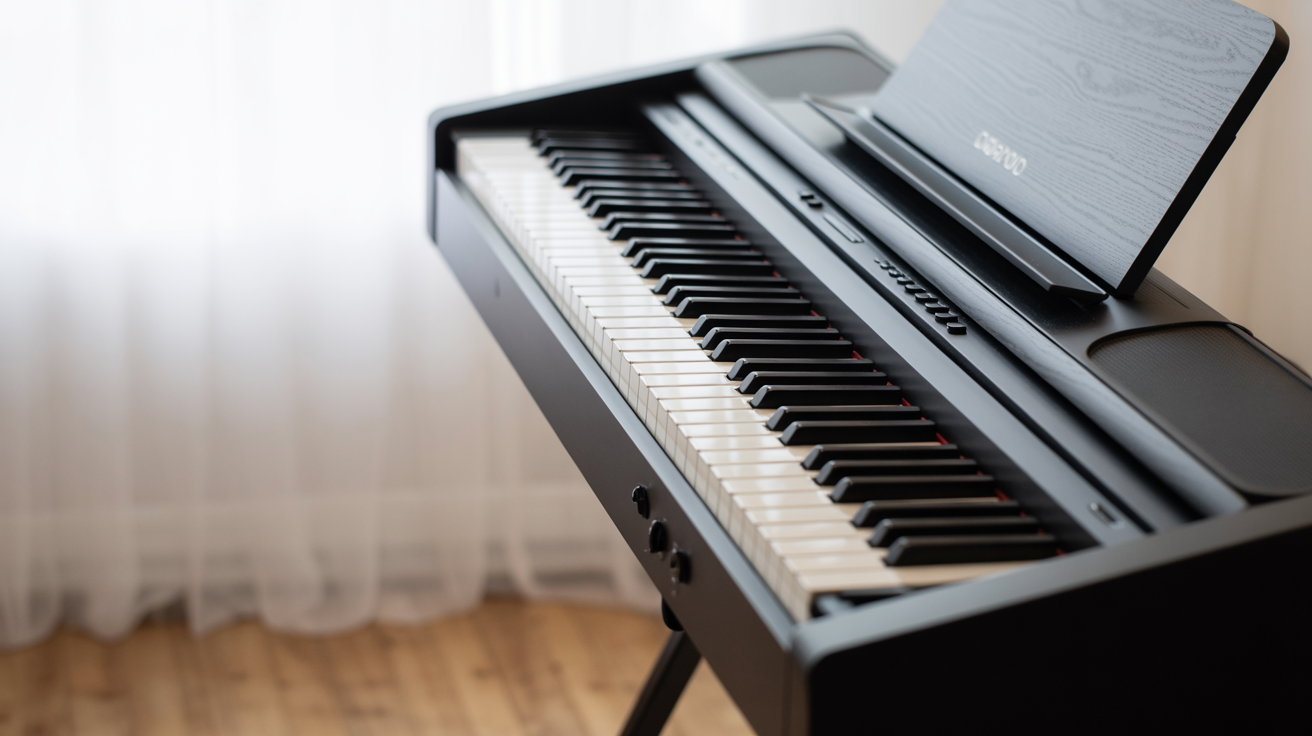
If you're trying to decide between a digital piano, a keyboard, and an acoustic piano, the short answer is: for most beginners, a digital piano with weighted keys is the best starting point. That answer comes with real caveats depending on your space, budget, and goals, so let's break down what each type actually is and what it means for learning.
What the three types actually are
These terms get used loosely, so it helps to nail down the differences before comparing them.
Acoustic piano: The original. Hammers strike strings when you press a key. The action (the mechanical system connecting your finger to the hammer) has been refined over centuries. Upright acoustics fit most rooms; grand pianos need significantly more space. Acoustics require regular tuning, typically two to four times per year, and occasional regulation and voicing by a technician.
Digital piano: An electronic instrument designed to replicate an acoustic piano as closely as possible. The better ones use weighted keys with a mechanism called hammer action or graded hammer action, where the keys feel heavier in the low notes and lighter in the high notes, just like a real piano. They have built-in speakers, a headphone jack, and typically 88 keys. No tuning is needed.
Keyboard (also called a portable keyboard or arranger keyboard): A lighter, cheaper electronic instrument. Keys are usually unweighted (they feel like pressing buttons, with spring resistance) or semi-weighted at best. Most have 61 keys. Keyboards often include hundreds of sounds, rhythms, and auto-accompaniment features. They're useful for certain music styles and easy to transport, but less suited as a primary learning tool for piano technique.
Why key action matters so much for beginners
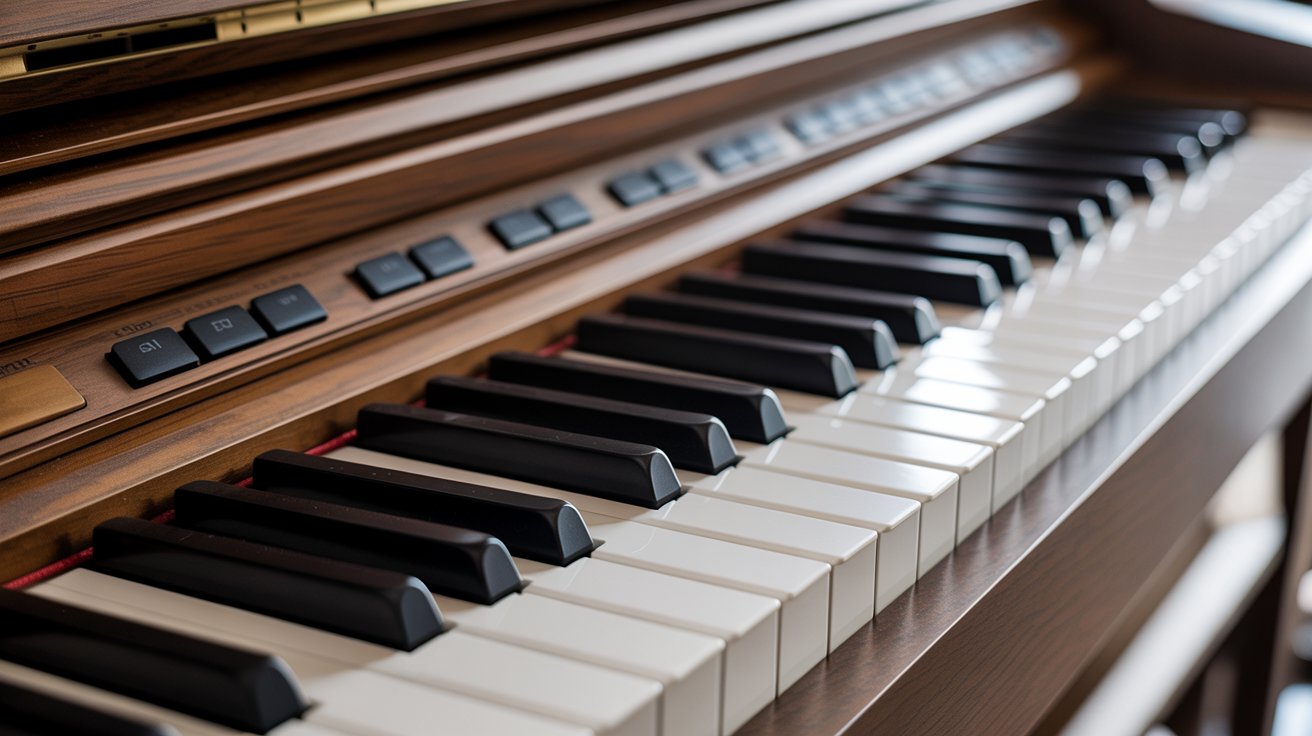
This is the thing most people don't realize until later: the way keys feel directly shapes how you play.
On a proper piano, you control dynamics (how loud or soft each note sounds) through finger pressure and speed. Press a key slowly and gently and you get a soft note; press quickly and firmly and you get a loud one. This property is called touch sensitivity or velocity sensitivity.
On unweighted keys, the keys travel the same way regardless of how hard you press. Some budget keyboards have basic velocity sensitivity so the sound changes, but the key itself doesn't resist your fingers the way a piano action does. You can't build proper finger strength or muscle memory for dynamic control.
For a beginner learning classical piano, jazz, or any style where expressive control matters, unweighted keys are a genuine handicap. Your hands learn the wrong habits, and switching to a real piano later can feel like starting over.
For a beginner learning to play pop songs, experiment with sounds, or accompany themselves casually, an unweighted keyboard can work fine, especially if budget is the main constraint.
Comparing the three options directly
| Feature | Acoustic piano | Digital piano | Portable keyboard |
|---|---|---|---|
| Key action | Hammer action (authentic) | Weighted / graded hammer action | Unweighted or semi-weighted |
| Touch sensitivity | Yes (full dynamic range) | Yes (on most models) | Basic or none on budget models |
| Number of keys | 88 | 88 | Usually 61 |
| Headphone practice | No | Yes | Yes |
| Tuning required | Yes (2-4x per year) | No | No |
| Space needed | Medium to large | Small to medium | Small |
| Price range (new) | $2,000 and up | $400 and up | $80-$600 |
| Maintenance cost | Ongoing | Low | Low |
A few notes on that table: acoustic pianos can be found used for considerably less, sometimes near-free if you're willing to pay for moving and tuning. Used digital pianos hold up well and can be good value. The keyboard column covers a wide range. An $80 toy keyboard and a $600 arranger with semi-weighted keys are very different instruments.
The 88-key vs 61-key question
Most beginner piano music fits within 61 keys for the first year or two, so you won't immediately miss the extra notes. But there are two reasons 88 keys matter even for beginners.
First, some pieces at even an intermediate level do use the full range. If you're learning from a teacher who assigns standard repertoire, you may hit that limit sooner than you expect.
Second, and more practically: if you eventually want to play on a real piano at a school, church, friend's house, or audition, those all have 88 keys. Training on 61 means you haven't mapped out where those outer octaves are.
For a deeper look at this trade-off, how many keys do you need? 61 vs 76 vs 88 keys explained walks through the options by learning style.
When an acoustic piano makes sense
Acoustics are not the obvious beginner choice because of cost and logistics, but they're worth considering in a few situations.
You already have one. If there's an acoustic piano in the house, say a family upright, that's probably your best learning instrument, assuming it's been tuned recently. A well-maintained upright beats most digital pianos under $1,000 for feel and sound.
You're committed to classical training. Serious classical study eventually requires an acoustic. If a teacher recommends one from the start, listen to them.
You can find a good used one affordably. Older uprights sometimes go for very little, and a basic tuning and service can make them playable. The catch: moving a piano is typically $300-$600, and a badly maintained instrument can develop expensive problems.
Acoustics are less practical if you live in an apartment, have noise-sensitive neighbors, or need to practice at odd hours. The headphone jack on a digital piano is genuinely useful. A lot of people get their practice in at 10pm once the kids are in bed.
What to look for in a beginner digital piano
If you've landed on "digital piano" (probably the right call for most beginners), here's what to prioritize.
Hammer action keys, not just "weighted." True hammer action includes a physical hammer mechanism inside the key. Cheaper instruments advertise "weighted keys" when they mean resistance from springs. They feel different. Try them in person if you can.
Graded hammer action means the bass keys are heavier than the treble keys, matching an acoustic. Worth looking for if your budget allows.
Touch sensitivity should be standard on any piano above the budget tier. Check that it has multiple sensitivity settings, which is useful as you learn to control dynamics more deliberately.
A pedal input. You'll need a sustain pedal eventually. Most digital pianos include one; just make sure there's a port for it.
88 keys is worth the small extra cost over 73 or 76-key versions.
On speakers: built-in audio quality on digital pianos ranges from tinny to genuinely good. Don't obsess over it. A decent pair of headphones transforms even mediocre built-in speakers into a solid practice experience.
Getting oriented once you sit down
Whichever instrument you choose, one of the first things to do is find middle C. It's the landmark note at the center of the keyboard that all beginner music references. See how to find middle C and get your bearings on the keyboard if you're not sure where to start.
From there, it helps to have a plan rather than jumping straight into random songs. How to start learning piano: a complete beginner's roadmap outlines what a structured first few months can look like.
Frequently asked questions
Can I learn piano properly on a keyboard?
It depends on the keyboard. A 61-key instrument with unweighted keys can work for learning to read music, understand rhythm, and play simple melodies. For developing piano technique — finger independence, dynamic control, proper hand position — it's a real limitation. If budget is the constraint, a keyboard is better than nothing, but plan to upgrade to a weighted instrument within a year or two.
Do I need 88 keys to start?
Not strictly. Many beginners spend their first year entirely within the range a 61-key keyboard covers. But if you plan to take lessons, play classical repertoire, or eventually use a real piano, 88 keys will matter. A digital piano with 88 weighted keys also tends to be better built overall.
How much should a beginner spend?
A usable beginner digital piano with hammer action starts around $400-$500 new. Spending $700-$1,000 gets you noticeably better key feel and speakers. Below $300, you're mostly in unweighted keyboard territory. Used digital pianos can be excellent value: a five-year-old 88-key instrument from a reputable maker at half price often beats a new budget model.
Is an acoustic piano better than digital for learning?
For technique, a well-maintained acoustic is hard to beat because the action is the real thing. Practically, digital pianos win for most beginners: no tuning, headphone practice, smaller footprint, lower upfront cost. The feel gap has narrowed considerably at the mid-range price point. Neither is a bad choice if the instrument fits your situation.
What about apps and MIDI keyboards?
A MIDI keyboard (often unweighted, 49 or 61 keys) paired with a piano app can work as a very budget entry point. The limitation is the same as any unweighted keyboard: you're not building piano technique. If you know you want to learn piano specifically rather than just explore music, put the money toward a weighted instrument instead.