Getting Started
How Many Keys Do You Need? 61 vs 76 vs 88 Keys Explained
61, 76, or 88 keys? Here's how to pick the right keyboard size for a beginner without overspending or under-buying.
Short answer: 61 keys is enough to start. You can practice scales, chords, and most beginner pieces on a 61-key instrument without ever running out of room. But how many keys do you need on a keyboard long-term depends on what you want to play, and that answer changes as you improve. This guide walks through what each size actually covers so you can buy once without regretting it.
What the numbers mean
A standard acoustic piano has 88 keys (52 white and 36 black), spanning just over seven octaves. That range covers the lowest bass notes and the highest treble notes used in Western music.
Digital keyboards come in three common sizes:
- 61 keys (5 octaves)
- 76 keys (6+ octaves)
- 88 keys (full piano range)
An octave is a group of 8 notes, for example from one C to the next C higher up. The further left you go on a keyboard, the lower the pitch; the further right, the higher. Most of the music beginners learn in their first year sits comfortably in the middle three or four octaves, which all three sizes share.
What you can and can't do on 61 keys
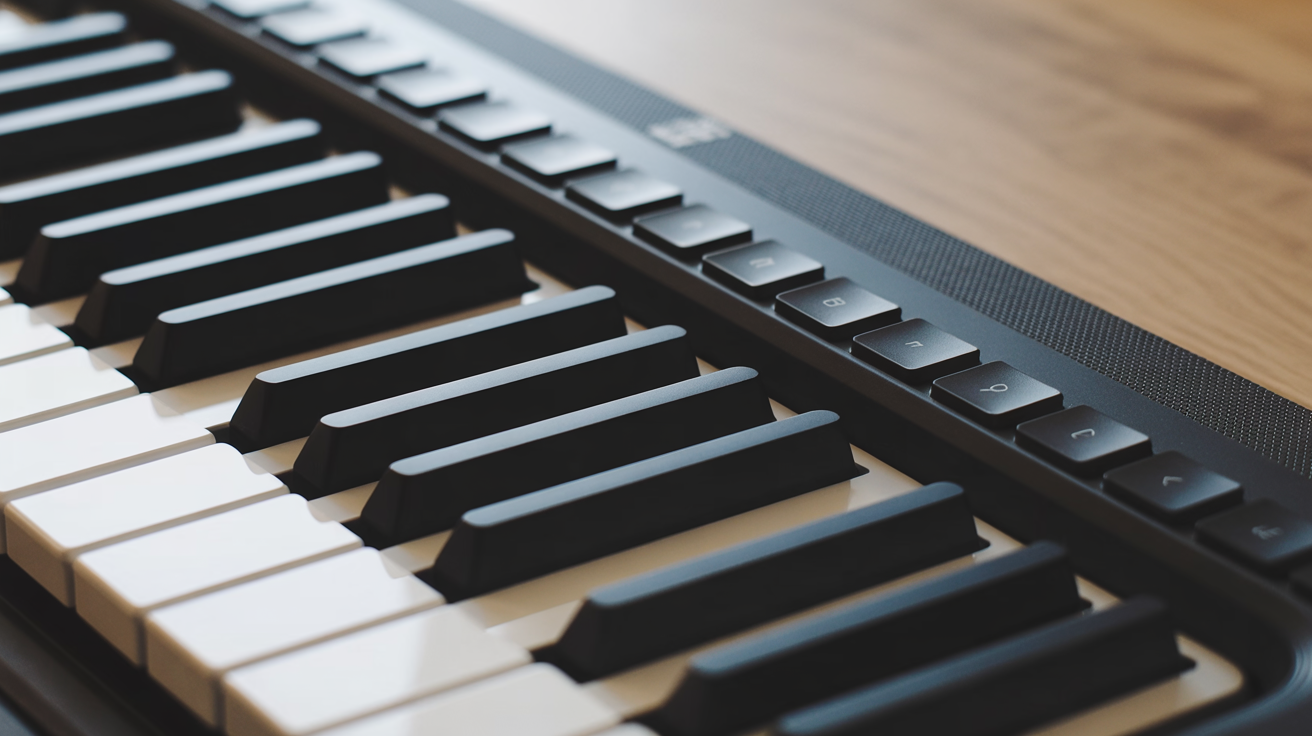
A 61-key keyboard covers the middle five octaves of the piano range. You lose roughly an octave on each end: some deep bass notes on the left, some very high notes on the right.
For beginners, those missing octaves rarely matter. Beginner method books, pop songs, simple classical pieces, and most folk and worship music stay well within the 61-key range. You'll work through months of lessons (learning hand position, reading notation, practicing scales in all twelve keys, building basic chord vocabulary) before you hit a note that isn't there.
Where 61 keys starts to feel limiting:
- Late-beginner and intermediate classical repertoire. Pieces like Beethoven's "Moonlight Sonata" (first movement) or Chopin's preludes use the full keyboard width. You can't play them as written on 61 keys.
- Left-hand bass lines in advanced pop and jazz. These often drop below the lowest note on a 61-key board.
- Playing from sheet music. If you want to play everything exactly as written rather than adapting it, a smaller keyboard creates constant workarounds.
If you're buying your first instrument and you already know you're serious, a 76-key board is a solid middle option: more range than 61, without the full cost and footprint of an 88.
When 88 keys matters
88 keys is the standard for anyone who wants to play classical piano repertoire at an intermediate level or beyond. Once you're working on sonatinas, Romantic-era pieces, or anything arranged for full piano, you'll use notes outside the 61-key range on a regular basis.
88 keys also matters for technique. The exercises in method books like Hanon or Czerny (which serious students use to build finger strength and evenness) are sometimes designed to be played across the full range. Playing them on a shortened keyboard means either stopping early or transposing on the fly, which is a distracting workaround when the whole point is motor repetition.
If your goal is to eventually play:
- Classical sonatas or concertos
- Full hymnal or choral accompaniment
- Advanced jazz voicings that use the whole range
- Anything scored for orchestra piano
...then 88 keys is worth the extra cost at some point. It doesn't have to be your first instrument, but it probably needs to be your second.
Keys vs. use case at a glance
| Key count | Octaves | Good for | What's missing |
|---|---|---|---|
| 61 | 5 | Beginners, pop/rock, worship, songwriting, practice on a budget | About 1 octave of bass, 1 octave of treble |
| 76 | 6+ | Intermediate players, most pop and classical through late beginner | About half an octave on each end |
| 88 | 7+ | Full classical repertoire, advanced technique, all published piano music | Nothing; this is the complete range |
Weighted keys vs. unweighted: a separate question
Key count and key action are two different things, and beginners sometimes conflate them. "Weighted" refers to how the keys feel when you press them, not how many there are.
Acoustic piano keys have a specific physical resistance: heavier in the bass register, lighter in the treble. Each key is connected to a hammer mechanism that strikes a string. This creates what pianists call touch sensitivity — play softly and you get a quiet sound, play firmly and you get a louder, more present tone.
Unweighted keys (also called "synth action") don't replicate that resistance. They feel more like organ keys: light and springy. You can move through them faster with less effort, but you won't be building the finger strength or control that piano technique actually requires.
If you practice on unweighted keys and later sit down at an acoustic piano or a weighted digital, your hands will feel lost. The muscle memory you've built doesn't transfer as cleanly. Most piano teachers recommend weighted or semi-weighted keys, even for a first instrument, for exactly this reason.
A 61-key board with weighted keys is a better learning tool than an 88-key board with unweighted keys. When comparing options, check the product specs: "hammer action" or "graded hammer action" means weighted; "synth action" or no action listed usually means unweighted. For a fuller breakdown, see digital piano vs keyboard vs acoustic: what should a beginner buy?.
Touch sensitivity is not the same as weighted action
One more term worth understanding: "touch sensitive" (also called "velocity sensitive") means the keyboard responds to how hard you press. Soft pressure makes a softer sound; firm pressure makes a louder one. This is a software/sensor feature, separate from the physical weight of the keys.
Most modern keyboards, even inexpensive ones, are touch sensitive. Some very cheap instruments are not: every key plays at the same volume regardless of how hard you press. Avoid those if you're learning piano. Touch sensitivity is a baseline requirement for building dynamic control, which is what makes music sound like music rather than a typewriter.
A practical buying framework
Think about your situation in two steps.
How committed are you right now? If you're genuinely unsure whether you'll stick with piano, a 61-key weighted keyboard is a reasonable starting point. You can learn everything a beginner needs on it, and if you continue, you'll upgrade knowing exactly what you need. If you're already certain this is a long-term pursuit (you've wanted to play for years, or you're starting formal lessons), buying 88 weighted keys upfront saves you from buying twice. See how to start learning piano: a complete beginner's roadmap for help building a realistic learning plan.
What do you want to play? Pop, worship songs, and casual playing: 61 keys is genuinely fine. Classical piano: plan for 88, even if not immediately. Jazz: depends on how far you go, but 76 or 88 covers most real-world needs.
One practical note: piano keys should be full-size. Some inexpensive 61-key instruments use slightly narrower keys. If you can, compare the key width to a standard piano before buying. Your hands learn specific spacing, and if the keys are narrow, that muscle memory won't transfer cleanly to a standard instrument. To get your bearings on the keyboard layout itself, how to find middle C and orient yourself on any keyboard is a useful starting point.
Frequently Asked Questions
Can I learn piano on a 61-key keyboard?
Yes. 61 keys covers everything you need for at least the first year of lessons, and often longer. The only pieces you can't play exactly as written are intermediate-to-advanced classical works that use notes outside the five-octave range. Most beginner and early-intermediate repertoire fits comfortably within 61 keys.
Is 76 keys enough for classical piano?
For most beginner and intermediate classical music, yes. A 76-key board covers more of the standard repertoire than a 61-key board. You'll still hit the limit on some pieces (certain Beethoven sonatas, for example, use the full 88-key range). If classical is your direction, 88 keys is the cleaner long-term choice.
Do weighted keys really matter for beginners?
They matter more than key count, in most cases. Weighted action builds the finger strength and touch control that piano technique depends on. If you practice on unweighted keys for months and then sit at a real piano, the heavier resistance will feel foreign. Semi-weighted is better than nothing; fully weighted (hammer action) is best for anyone learning seriously.
What's the difference between 61 and 88 keys in practical terms?
About two octaves total, one on each end of the keyboard. The low bass notes (used in left-hand accompaniment for advanced pieces) and the very high treble notes (more common in classical and some jazz) are what you lose on a 61-key board. For everyday beginner practice, those notes rarely come up.
Should a beginner buy 88 keys?
It depends on goals and budget. If money isn't a constraint and you're committed to learning properly, 88 weighted keys removes all range limitations. If budget matters, a 61-key weighted instrument is a completely valid starting point. You can upgrade later without losing any of the skills you've built on the smaller board.