Practice & Progress
How Long Should Beginners Practice Piano Each Day?
Find out exactly how long to practice piano a day as a beginner, with realistic targets by age, tips to avoid fatigue, and how to split sessions.

Most beginners ask how long to practice piano a day before they even sit down at the keys. The short answer: 15 to 30 minutes a day, done consistently, will produce faster results than a 90-minute weekend marathon. That is not a motivational slogan. It reflects how motor memory actually forms. Your fingers learn to find a chord or a scale by repeating the movement many times over many days, not by grinding through a single long session.
That said, the right amount depends on your age, your physical condition, and what you are trying to accomplish. The numbers below are realistic starting points, not hard rules.
How much practice time beginners actually need
A common misconception is that more hours always means faster progress. For beginners especially, the opposite is often true past a certain point. Fatigue degrades the quality of your repetitions, and low-quality repetitions reinforce mistakes.
Here is a general guide for daily piano practice time at different stages:
| Level / age | Suggested daily practice | Notes |
|---|---|---|
| Young children (ages 5–7) | 10–15 minutes | Attention and hand endurance are limited; two short sessions work well |
| Older children (ages 8–12) | 15–20 minutes | Can stretch to 25 min once a basic routine is established |
| Teenagers | 20–30 minutes | Enough to cover scales, a piece, and some sight-reading |
| Adults (beginner) | 20–30 minutes | Consistency matters more than duration at this stage |
| Adults (intermediate) | 30–45 minutes | Can split into two sessions if schedule allows |
These ranges assume you are actually focusing: not noodling, not replaying the parts you already know well because they feel good. Focused practice at 20 minutes beats distracted practice at 60.
Why consistency beats duration
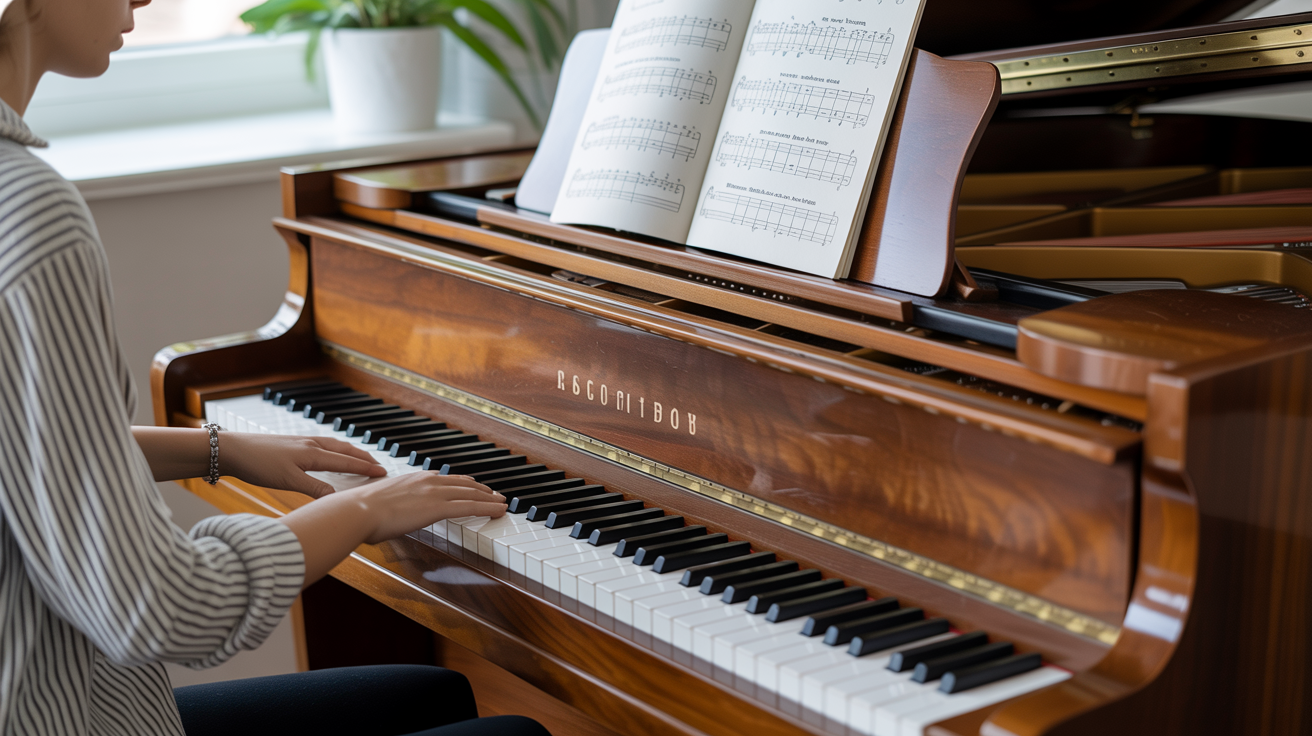
If you practice 25 minutes every day for a week, you accumulate about three hours of practice. If you skip Monday through Friday and try to make it up with a three-hour Saturday session, you get the same total time on paper but much worse results.
The reason is consolidation. During sleep, your brain reviews the motor patterns from that day's practice and strengthens them. A session every day gives your brain seven consolidation cycles per week. A weekend-only session gives it one.
This is why teachers tell students to practice "a little every day" rather than front-loading. It is not just advice about habit formation. It is how the memory system actually works.
For building a session structure that actually takes advantage of this, see how to build a daily piano practice routine that works.
How to divide your practice time inside a session
A 25-minute session is not just 25 minutes of playing through your current piece from start to finish. That approach feels productive but usually isn't. A better split looks like this:
Warm-up (3–5 minutes): Slow five-finger exercises or a scale you already know. Play at a comfortable tempo, just enough to get the blood moving in your hands without demanding much concentration.
Technical work (5–8 minutes): Hands separately on a tricky passage, or a new scale at a tempo where you can play every note cleanly. Playing slowly on purpose is one of the most effective techniques beginners skip. If you are not sure why slow practice works, how to practice piano slowly and why it works explains the mechanics.
Piece work (10–12 minutes): Work on the section that is actually giving you trouble, not the section that already sounds good. Isolate two or four bars, repeat them slowly until they feel automatic, then connect them to what comes before and after. Only then run the passage at full tempo.
Cool-down / fun (3–5 minutes): Play something you enjoy and already know reasonably well. This ends the session on a positive note and keeps motivation intact.
Splitting sessions into two shorter ones
If your schedule allows it, two 15-minute sessions in a day (one in the morning and one in the evening) often outperform a single 30-minute block. You get two consolidation-triggering events in one day, and neither session is long enough for fatigue to creep in.
This works particularly well for adults who practice before work and again after dinner. If you can only carve out one block, that is fine. One consistent session beats two hypothetical ones.
Signs you are practicing too long
Most beginners underestimate how quickly hand fatigue sets in, especially in the early months when the small muscles of the hand and forearm are doing unfamiliar work. Some things to watch for:
- Your fingers start clipping notes or losing evenness in a scale you were playing cleanly five minutes ago
- You notice tension creeping into your wrists or forearms
- You start making the same mistake repeatedly even after slowing down
- You are zoning out and just going through the motions
When any of these appear, stop. Rest for at least 10 minutes before continuing, or just end the session. Playing through fatigue ingrains bad technique and risks repetitive strain injury. This is not something to push through.
If you are an adult returning to piano after years away, your hands will likely tire faster than you expect for the first few weeks. Start at 15 minutes and build up gradually over a month.
Using a metronome to make every minute count
One underused tool for keeping practice sessions efficient is a metronome. When you have limited time, you cannot afford to practice at a tempo that lets you fudge the rhythm. A metronome makes every error audible immediately, which means you fix problems faster.
Set it slow, slower than you think you need, and only move the tempo up when three consecutive repetitions are clean. How to use a metronome to improve your timing walks through exactly how to do this with a new piece or a tricky passage.
What to do when you can't practice every day
Life interferes. A day or two missed each week will not derail your progress as long as you make up neither the time nor the guilt. Just pick up where you left off on the next available day.
What does slow progress is missing four or five days in a row consistently. At that point, some of the muscle memory from the previous week starts to degrade and you spend the next session relearning rather than building. If your schedule is irregular, aim for a minimum of four days per week rather than a daily target. It is easier to hit and still gives your brain enough consolidation cycles.
Frequently Asked Questions
How long should a complete beginner practice piano each day?
Start with 15–20 minutes. That is long enough to warm up, work on one technical point, and run through a short piece. Once that feels comfortable and you can stay focused for the full session, add five minutes. Most adult beginners find 25–30 minutes is the practical ceiling before concentration drops.
Is 30 minutes of piano practice a day enough to make progress?
For a beginner, yes, provided you are practicing deliberately. Thirty focused minutes, structured with a warm-up, technical work, and piece work, will produce clear progress week over week. The caveat is "focused." Thirty minutes of half-attentive run-throughs will not.
Can I practice too much as a beginner?
Yes. The hands tire before the mind does, and beginners often cannot feel the fatigue until after the fact. Soreness in the forearm or wrist the next morning is a sign you overdid it. An hour or more per day is generally too much in the first few months. Build duration slowly over several weeks.
Should kids practice piano every day?
Daily practice is ideal for building muscle memory, but for young children (under 8), two 10-minute sessions often work better than one 15-minute session, since attention is shorter and enthusiasm is easier to maintain when sessions end before boredom sets in. Missing a day occasionally is not a problem; missing most days is.
What if I only have 10 minutes to practice?
Ten minutes is worth doing. Skip the full warm-up and spend the time entirely on one short passage: hands separately, slowly, a handful of clean repetitions. You will not make fast progress at 10 minutes a day, but you will maintain what you have and keep the habit alive, which matters more than people expect.