Technique & Hands
How to Build Finger Independence and Strength at the Piano
Learn targeted exercises to build piano finger independence and strengthen weak fingers, including the fourth finger, without injury.
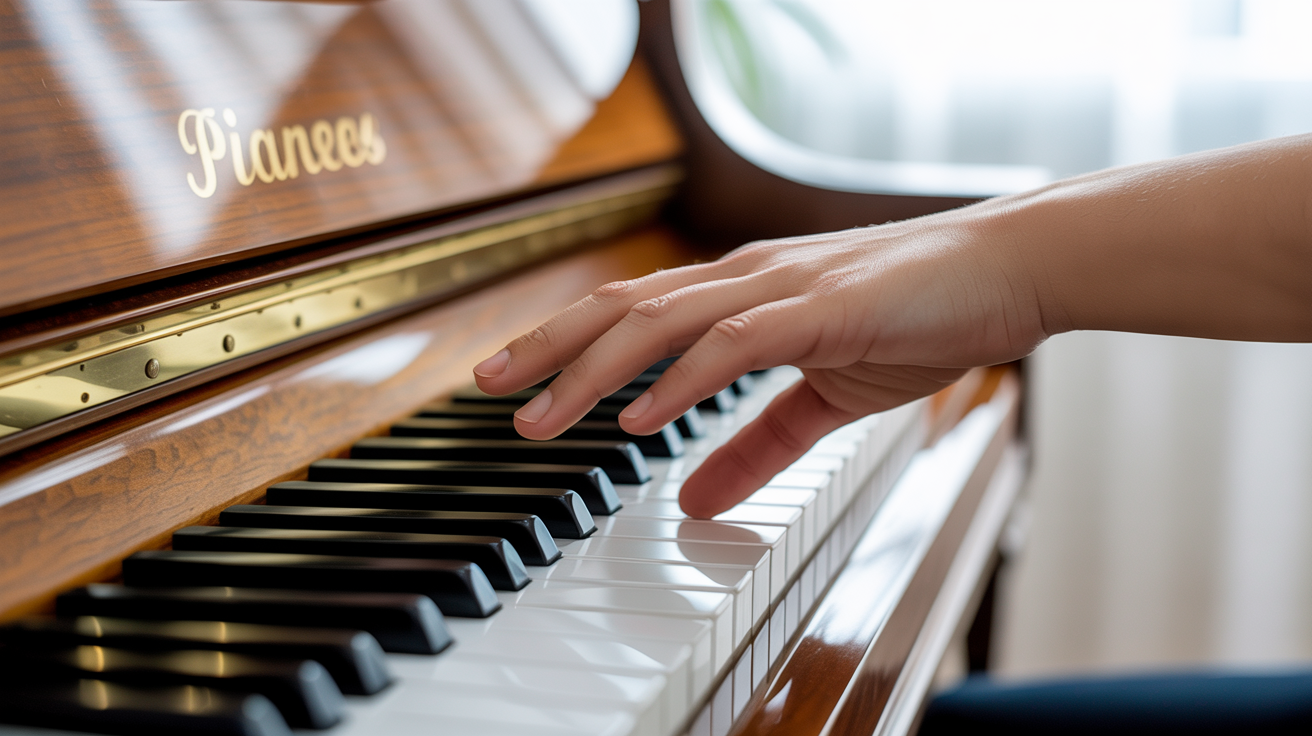
If your fingers feel like they move in groups rather than individually, you are not doing anything wrong. The tendons that connect your fingers share tissue, so they naturally want to travel together. Piano finger independence is the process of teaching your nervous system to override that tendency one finger at a time. You can make real progress on this within a few weeks of consistent, focused practice.
Why Finger Independence Matters More Than Raw Strength
A common misconception is that difficulty playing fast or evenly comes from fingers that are not strong enough. In most cases, the real problem is coordination, not muscle. A finger can press a key firmly yet still hesitate or move unevenly when you ask it to work while its neighbors stay still.
Finger strength piano exercises are worth doing, but the goal is controlled strength, not maximum force. Hammering keys too hard leads to tension, and tension is the enemy of speed and accuracy. The useful target is: each finger presses its key with consistent weight, lifts cleanly, and does not drag its neighbors along for the ride.
Before you start any independence work, check these basics:
- Wrists are at or slightly above key level, not dropped or arched high
- Fingers are gently curved, not flat or hyper-extended at the top joint
- Shoulders and forearms are relaxed
- You can stop and reshake your hands at any point without feeling stiffness
If you feel sharp discomfort during any exercise below, stop. A mild sense of muscle fatigue is normal; pain is not.
The Weak Fourth Finger: What Is Actually Going On
The weak fourth finger at the piano is nearly universal among beginners. The ring finger shares a tendon with both the middle finger and the little finger. When you try to lift the fourth finger alone, the third or fifth often wants to come with it.
You can test this right now away from the piano. Lay your hand palm-down on a flat surface. Try to lift only your ring finger. Most people find it rises only a centimeter or two before the adjacent fingers twitch upward. That is not a character flaw; it is anatomy.
The fix is repetition of isolated movement, not aggressive stretching or squeezing a stress ball. Grip training works different muscles and does not transfer well to piano. What works is slow, deliberate motion with your attention on the finger that is supposed to stay down.
A simple tabletop drill:
- Place your right hand on a table with fingers relaxed and slightly curved.
- Press fingers 1, 2, 3, and 5 gently into the surface.
- Lift only finger 4 as high as you comfortably can.
- Lower it slowly. Repeat 8-10 times.
- Switch hands.
Do this once or twice a day. Within a couple of weeks most players notice the ring finger lifting higher and the neighbors staying calmer. See piano finger numbers and correct fingering for beginners if you need a refresher on the standard numbering system.
Four Exercises to Build Independent Fingers at the Keyboard
Work through these in order. They build on each other, so do not skip ahead until the earlier ones feel controlled.
1. Finger Lifts on a Single Note
Pick one key, say middle C. Press it with finger 1 and hold it down. While it stays depressed, tap the same key or an adjacent key with each other finger in turn: 2, 3, 4, 5. The held finger does not move. Switch to holding with finger 2 and tapping with the others. Cycle through all five.
This trains your hand to maintain one point of contact while another finger works independently. Go slowly. Speed is irrelevant here.
2. The Thumb-Under Exercise on a Scale
Scales are one of the most efficient vehicles for independent fingers exercises because the thumb tuck moment demands that one finger crosses under the palm while others are still active on the keys.
Start with a C major scale in the right hand. Play slowly and focus on the moment finger 3 plays E and the thumb immediately begins to position itself under the palm for the F. The third finger should hold E long enough for the thumb to land cleanly, then release. No gap, no overlap.
See how to play the C major scale with the right fingering for the exact fingering pattern to use here.
3. Rhythmic Finger Isolation
Take a five-note pattern: 1-2-3-4-5 on the notes C-D-E-F-G. Play it at a slow, even tempo. Then alter the rhythm deliberately:
- Play finger 1 long, fingers 2-5 short
- Play finger 2 long, the others short
- Continue through each finger
The finger playing the long note has to sustain while the others move. This is one of the more direct ways to break the habit of fingers lifting as a group.
4. Contrary Motion
Play both hands at once moving in opposite directions from the center of the keyboard outward (right hand going up, left hand going down) and back. Use a simple five-finger position on C. The two hands mirror each other's finger numbers but move in opposite directions, which forces each hand to function independently of what the other is doing.
This also starts building the separate-hands coordination you need to play melody with one hand and accompaniment with the other.
A Practice Schedule That Works
Short and consistent beats long and sporadic. Ten minutes of focused independent finger work five days a week produces better results than a 45-minute session on the weekend.
| Day | Focus | Time |
|---|---|---|
| Mon | Tabletop ring-finger drill + finger lifts on keys | 10 min |
| Tue | Scale with thumb-under focus | 10 min |
| Wed | Rhythmic finger isolation | 10 min |
| Thu | Contrary motion | 10 min |
| Fri | Combine: scale + isolation in one slow run-through | 15 min |
| Sat/Sun | Rest, or play a piece you enjoy without focusing on independence drills |
As the individual exercises become comfortable, combine them. Play a scale and add rhythmic variation to it. Apply the finger-lift focus to passages in an actual piece you are learning. That transfer from exercise to music is the goal.
Once your fingers move more independently, you are ready to try scales in more keys. Beginner piano scales: which to learn first and why gives a clear order to follow.
Frequently Asked Questions
How long does it take to develop piano finger independence? Most beginners notice a real difference in four to eight weeks of consistent daily practice. The ring finger in particular often shows improvement within two weeks of the tabletop drill. Full independence across all fingers takes longer and continues developing as you learn more repertoire. Progress is steady rather than sudden.
Is it normal for the fourth finger to feel weaker than the others? Yes. The weak fourth finger at the piano is one of the most common points of frustration for beginners, and it has a clear anatomical cause. The ring finger shares tendons with its neighbors, so isolated movement takes more deliberate training than the other fingers require. It will improve with the targeted drills above.
Should I use a grip trainer or finger exerciser gadget? These devices build a different kind of strength than what piano playing requires. They train the flexor muscles used in squeezing, but piano technique depends more on the extensor muscles (which lift the fingers) and on coordination rather than grip force. Most teachers recommend using your practice time at the actual keyboard instead. If you enjoy using one away from the piano for general hand health, that is fine, but do not expect it to replace keyboard-specific drills.
Can I practice finger independence exercises too much? Yes. If your fingers, wrist, or forearm feel fatigued or achy, stop. Muscles and tendons need recovery time, especially when you are training movement patterns they are not used to. Ten to fifteen focused minutes per session is enough. More is not better if it leads to strain.
Do these exercises help with both hands equally? The exercises work for both hands, though most people find the left hand takes a bit longer to respond since everyday tasks rely on the right hand for most fine-motor work. Apply each drill to both hands separately before combining them. Give the weaker hand slightly more repetitions if needed.