Technique & Hands
How to Play with Both Hands Together for the First Time
Learn how to play piano with both hands using a step-by-step method that builds coordination gradually, without the usual frustration.
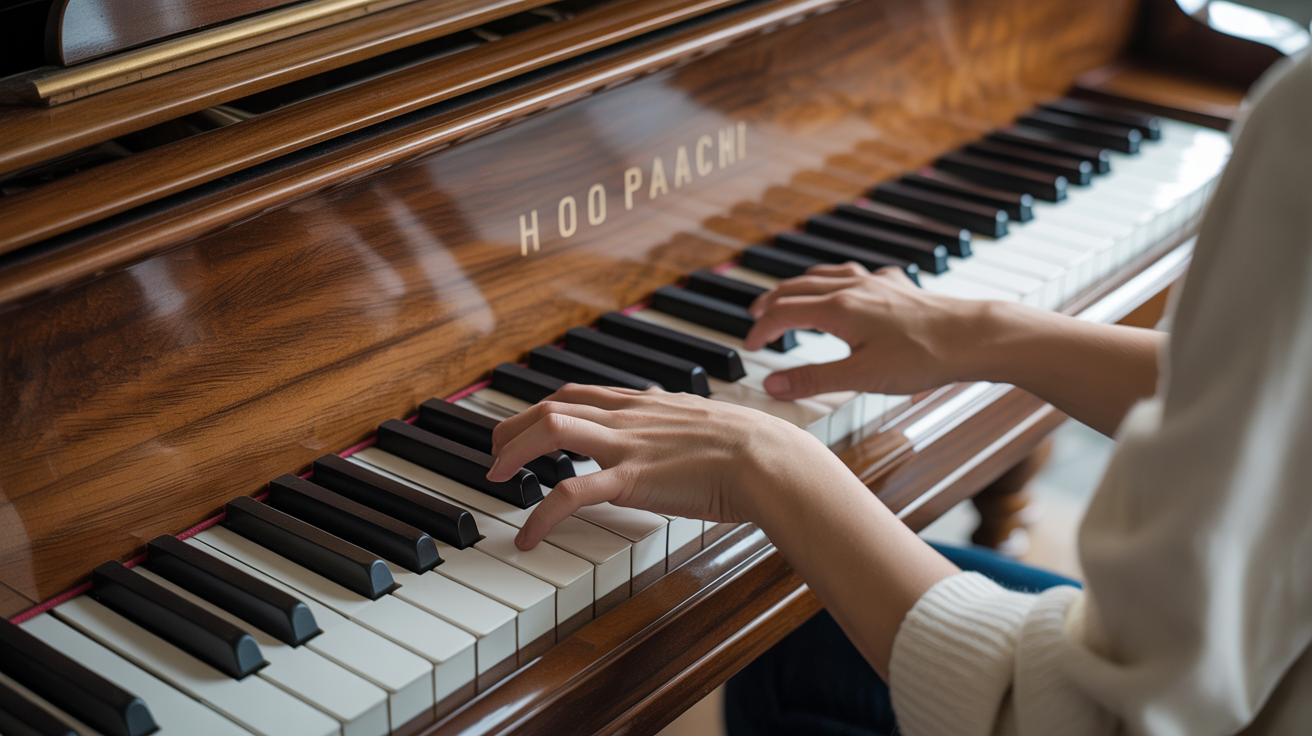
Learning how to play piano with both hands is the moment many beginners dread most. Your right hand has been getting along fine on its own, your left hand has learned its part, and then you try to combine them and your brain freezes. Everything falls apart at exactly the spot where it was working. This is completely normal. It is not a sign you lack talent. It is what the brain does when it is learning two independent motor streams at the same time, and there is a reliable way through it.
Why both hands feel impossible at first
Your brain does not multitask in the way we like to imagine. When you play hands separately, each hand runs on its own motor program. The moment you add the second hand, those two programs have to synchronize in real time, and neither one is automatic yet. The result is that both hands slow down, forget their parts, or speed up and crash into each other.
This is a very different kind of difficulty from learning a wrong note. It is a coordination problem, not a knowledge problem. Knowing your parts cold is the prerequisite for putting them together, but it does not guarantee the hands will cooperate on day one. Give your brain time to build the connection between the two streams.
Get each hand truly solid before you combine them
The most common mistake is rushing to hands together too early. If you can play your right-hand part without looking at the music and without hesitating, you are ready. If you have to think hard to remember what comes next, you are not.
Practice each hand until it runs on something close to autopilot. That means slow, correct repetition, not just running through it once and calling it done. A good test: can you hum the melody or count out loud while playing the hand alone? If yes, that hand is ready. If counting makes you stumble, keep practicing the hand on its own.
There is a threshold that feels sudden when you cross it. Before the threshold, you have to consciously retrieve each note. After it, the notes just come. That threshold is what you are aiming for with each hand before you try to combine them. It usually takes more repetitions than beginners expect, and that is fine. The repetitions done at this stage pay off directly when the hands go together.
Understanding piano finger numbers and correct fingering before this stage matters more than it seems. Consistent fingering is what lets a passage become automatic. If you change fingers every time, the motor program never settles. A fingering decision you make once and stick to is far more useful than the "best" fingering applied inconsistently.
A step-by-step method for putting hands together
This approach starts smaller than you think necessary. That is the point.
-
Choose just two or three notes to practice hands together. Not a full phrase, not even a full bar. Maybe the first two notes of your right hand against the first bass note of your left hand.
-
Set a tempo so slow it feels silly. If the piece is marked at 80 beats per minute, try 40. If 40 still feels rushed, try 30. The goal is zero hesitation, not reasonable speed.
-
Count out loud. Say "one, two, three, four" (or whatever the time signature calls for) while you play. Counting out loud does two things: it gives both hands a shared clock to lock onto, and it keeps you from holding your breath and rushing.
-
Play the short chunk hands together until it feels smooth three times in a row. Three clean repetitions at that tempo is the target, not one lucky run.
-
Add the next note or two. Keep the same slow tempo. Go back to the beginning of your chunk and play through to the new addition.
-
Extend gradually. A bar, then two bars, then to the end of the phrase. You are building the hands-together version the same way you built each hand alone: in small pieces, slowly, with repetition.
-
Speed up only after it is comfortable slow. Move the tempo up by five or ten beats per minute at a time. Each new tempo will feel slightly awkward for a few repetitions, then settle. Do not jump straight to performance tempo.
Start with melody plus a single bass note
Before you tackle anything with both hands moving constantly, simplify the left hand temporarily. Pick the most important bass note in each bar, usually the first beat, and play only that note while the right hand plays the full melody. This is not cheating. It is how pianists have learned to coordinate for centuries.
Once the melody flows against that single bass note, add the other left-hand notes gradually. If your piece has a simple bass pattern, add the second beat next, then any passing notes. If it has full chords, play root notes first, then add the full chord once the root version is solid.
This approach also makes musical sense. The bass note on beat one anchors the harmony. Playing it clearly is more important than scrambling through a full chord pattern that falls apart.
One more reason this method works: it reduces the number of new decisions your brain has to make at once. When the left hand plays a single held note, it is essentially on pause while the right hand takes care of everything moving. Your attention can stay with the melody and the rhythm. Once that is flowing, you have mental space to gradually feed more left-hand detail back in.
Hands-together practice at the scale level
Scales are a low-stakes way to build hands-together coordination before you need it in a real piece. The C major scale is the natural starting place because both hands share the same note names, and you can focus entirely on coordination without worrying about sharps or flats.
Play C major hands together, both hands starting on C an octave apart, going up one octave and coming back down. Use the standard fingerings so the thumb crossings happen in the same direction. At first, play one note at a time and wait between each note until you are sure both hands are landing together. Then gradually reduce the gap.
This is also a good place to notice which note gives you trouble. If your hands always split apart at the thumb crossing, slow down specifically at that spot and do it five times in a row before continuing. Targeted slow practice at the problem point beats running through the whole scale repeatedly.
For a broader view of which scales to add after C major, this guide to beginner piano scales lays out a logical order.
What to do when a specific spot keeps breaking down
Every piece has one or two spots where the hands refuse to cooperate. The wrong response is to start from the beginning every time and hope you get through it this time. That just reinforces the habit of playing well until that spot and then falling apart. The problem spot does not improve because you are never giving it concentrated attention.
Instead, isolate the bar or even the beat where things go wrong. Play just that fragment hands together at a speed where you can get it right. Repeat it until it feels normal. Then connect it to the bar before and the bar after, slowly. This is called "spot practice," and it is faster than running through the whole piece.
Some spots are hard because the left hand has an awkward jump right when the right hand has a busy passage. In those cases, practice the left hand jump alone at full tempo first until it is reflexive, then go back to hands together. Trying to fix both problems simultaneously at a hard spot rarely works. Fix them separately, then combine.
Another useful trick at a rough spot: play through the difficult bar in rhythmic patterns. For a four-note group, try playing the first note long and the others short (long-short-short-short), then shift the long note to the second position, and so on. The changing accent forces both hands to engage differently each time, and patterns that seemed impossible at an even tempo often clear up quickly.
Frequently Asked Questions
How long does it take to get comfortable playing with both hands?
It varies a lot depending on the complexity of the piece and how consistently you practice. For a simple song with a steady left-hand pattern, most beginners get a rough hands-together version in one or two practice sessions. Getting it smooth enough to feel musical usually takes a week or two of regular short sessions (15 to 20 minutes a day works better than one long session on the weekend).
Should I practice hands together every day, or alternate?
Both are valid. Many teachers recommend spending most of a practice session on hands-separate work, especially when learning new material, then ending with a short hands-together attempt. The hands-together attempt at the end plants the seed. The next day, the hands-separate review reinforces the individual motor programs, and then hands together again often feels noticeably better.
My left hand always slows down when I add the right hand. Is that normal?
Yes. The left hand is usually weaker and less automatic than the right for most beginners, so it tends to drag when attention splits. The fix is more left-hand-only practice, not more hands-together repetition. Make the left hand so automatic that it can run without much conscious attention, and it will stop dragging.
What if my hands keep playing at different speeds even when I try to go slow?
This is a coordination issue rather than a tempo issue. Try a technique called "rhythmic chunking": instead of playing steadily, pause briefly after each beat and make sure both hands are in the right position before playing the next beat. Play, pause, play, pause. The pause breaks the habit of one hand rushing. Once you can play with pauses cleanly, reduce the pause until it disappears.
Is it bad to look at both hands while I play?
Looking at your hands is fine while learning, especially for leaps or position shifts. Over time, you will naturally stop needing to look at the right hand as it gets more automatic, and you will glance at the left hand mainly for larger jumps. Do not worry about it in the early stages. Eye movement is part of the skill too, and it develops on its own.