Technique & Hands
Relaxed Hands: Avoiding Tension, Wrist Pain, and Strain
Learn how to keep your hands relaxed at the piano, spot early signs of tension, and protect your wrists from strain as a beginner.
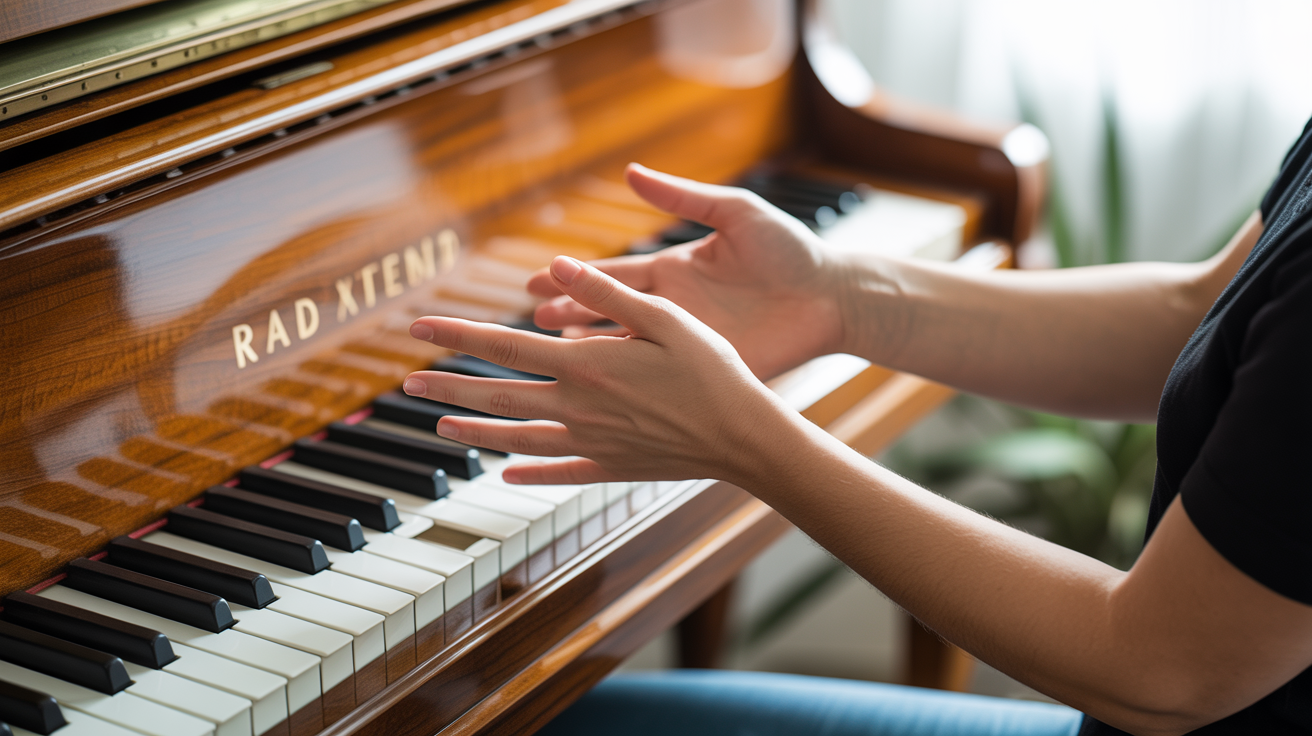
Piano hand tension is one of the most common complaints beginners run into, usually after a few weeks of practice when pieces start getting longer or harder. The good news: tension is mostly a habit, and habits can be changed. This guide walks through what causes it, how to feel the difference between relaxed and tight hands, and what adjustments actually help.
If you ever feel sharp or lasting pain in your hands, wrists, arms, or shoulders, stop and rest. Anything that persists deserves attention from a qualified medical professional, not a longer practice session.
What Causes Piano Hand Tension
Tension at the piano almost always comes from a combination of gripping and bracing. Gripping means squeezing the keys rather than pressing them. Bracing means holding your wrist, forearm, or shoulder stiff instead of letting the weight of your arm do the work.
A few specific triggers:
- Trying to play faster than your current coordination allows. The fingers tighten up to compensate for uncertainty.
- Looking at the keys too intensely. People often hold their breath and stiffen their neck and shoulders without realizing it.
- Sitting too high or too low. If your forearms aren't roughly parallel to the floor, your wrists have to compensate with every movement.
- Practicing through discomfort. A dull ache or burning sensation is a warning sign. Pushing through it usually makes the underlying habit worse.
How to Check Your Own Tension
You can catch tension early by running a quick body scan at the start of each practice session and again mid-way through.
Start at your shoulders. Let them drop away from your ears. Now check your elbows: they should hang loosely at your sides, not pressed against your ribcage. Move to your wrists: are they hovering at a neutral height, or are they dropped below the keys or raised sharply upward? Finally, look at your fingers. Are they curled gently, or are they gripping as if holding something?
A reliable test: lift one hand off the keys, shake it loosely from the wrist (like you're trying to flick water off your fingertips), then place it back. If your hand lands heavier and more settled than it was before, that's the feeling you're looking for.
Positioning That Helps Relaxed Hands Piano
Small adjustments to your setup can remove a lot of strain before you play a single note.
Bench height. Sit so your forearms are level or very slightly tilted downward toward the keys. If the bench is too low, your wrists crane upward. Too high, and your shoulders start to lift. Experiment with the height until your arms feel like they hang naturally from your shoulders.
Distance from the keyboard. Scoot close enough that your elbows are slightly in front of your torso, not behind it. If you're reaching forward to hit the keys, your shoulders will tighten.
Wrist height. Your wrist should stay roughly level with the back of your hand, neither sagging below the keys nor arching sharply up. Think of balancing a coin on the back of your hand without letting it slide off.
Feet on the floor. Keep both feet flat on the floor or on a footrest. Dangling feet create subtle tension in the hips and lower back that travels upward.
For more on how finger position connects to all of this, see the guide on piano finger numbers and correct fingering for beginners.
Practical Ways to Relax Hands While Playing
Use arm weight, not finger pressure
You don't need to push keys down with force. The keys respond to weight. Try resting your hand on the keys with no intention of pressing anything, just letting the arm settle. You'll hear a sound. That natural weight is roughly what you need for a medium-dynamic note. For softer notes, use less weight. For louder notes, add a little more. The fingers guide and direct; the arm provides the weight.
Slow down before you tighten up
Speed is where tension hides. If you notice your hand clenching during a passage, the tempo is almost certainly faster than your coordination is ready for. Drop it back far enough that the movement feels easy and slow. Practice at that tempo until it's genuinely comfortable, then inch up gradually. This applies directly to scale practice: see how to play the C major scale with the right fingering for a pacing approach.
Keep your thumb light
Thumb tension is one of the sneakiest contributors to piano wrist pain. Many beginners press the thumb in from the side rather than landing it on the pad of the tip. Try to keep the thumb relaxed and slightly curved, landing near the outer corner of the key rather than pressing hard from the base of the joint.
Take mini-breaks during practice
A break doesn't have to mean stopping entirely. After finishing a difficult section, lift your hands off the keys, let them rest in your lap for 10 to 15 seconds, and shake them out. This simple reset prevents tension from building up unnoticed over a long session.
Warning Signs Worth Paying Attention To
| Sensation | What it might mean |
|---|---|
| Mild tiredness or heaviness after a long session | Normal muscle fatigue, rest and it clears |
| Burning or aching during play | Tension is building, stop and reset your position |
| Pain that lingers after you stop | Rest for a day or two; if it persists, see a professional |
| Numbness or tingling in the fingers | Could be nerve-related, rest immediately |
| Sharp pain anywhere in the hand or wrist | Stop entirely, do not push through |
No practice goal is worth playing through pain. Most tension-related discomfort resolves quickly when you rest and correct the underlying habit. Recurring pain is a different matter.
Building Good Habits Over Time
The goal is to make relaxed hands your default, not something you have to actively remind yourself about. That takes time and repetition.
A few habits that help:
- Start every practice session with a gentle warm-up at a slow tempo before attempting anything challenging.
- Use a mirror or camera to check your posture once a week. It's easy to drift without noticing.
- When learning a new piece, separate the hands and practice each at a slow tempo before combining them.
- If you're working on scales or finger exercises, keep the repetitions short and varied rather than grinding the same pattern for minutes at a time. See beginner piano scales: which to learn first and why for a sequence that keeps variety built in.
Tension tends to creep back in during stressful practice moments: passages that feel hard, tempos that feel ambitious, performances that feel high-stakes. Knowing that, you can treat a tightening hand as information: this section needs more slow work, not more determination.
Frequently Asked Questions
Is some tension normal when learning piano? A small amount of muscle engagement is necessary to play. The kind of tension to watch for is the kind that persists when you're not actively playing, or that increases as a passage goes on rather than easing with repetition. Light muscle use is fine; gripping and bracing are not.
How long does it take to fix piano hand tension? It depends on how ingrained the habit is. Beginners who catch it early can often shift their default in a few weeks of mindful practice. If the tension is long-standing, it may take a couple of months of consistent slow-practice work to retrain the movement pattern.
Can I practice if my wrists are a little sore? A light ache that's clearly from a long practice session and disappears after rest is usually fine to work through gently the next day at a reduced intensity. Pain that is sharp, localized, or that doesn't clear after a full rest day is worth stepping back from entirely until it resolves.
Does the type of keyboard affect tension? Yes, to a degree. Very stiff keys require more force, which can encourage gripping. Very light unweighted keys can lead to a style of playing that doesn't transfer well to acoustic pianos. Fully weighted or semi-weighted keys give more feedback about how much force you're using, which makes it easier to notice and correct tension.
What's the single most useful thing a beginner can do to avoid wrist pain? Slow down. Most wrist and hand problems at the beginner stage trace back to practicing at tempos faster than current coordination allows. Playing slowly and staying relaxed builds the muscle memory correctly. Speed follows naturally once the movement pattern is solid.