Reading Music
Sight-Reading for Beginners: How to Read New Music at the Piano
Learn piano sight reading for beginners: how to read new music at the piano, practical tips to improve, and simple drills to build confidence fast.
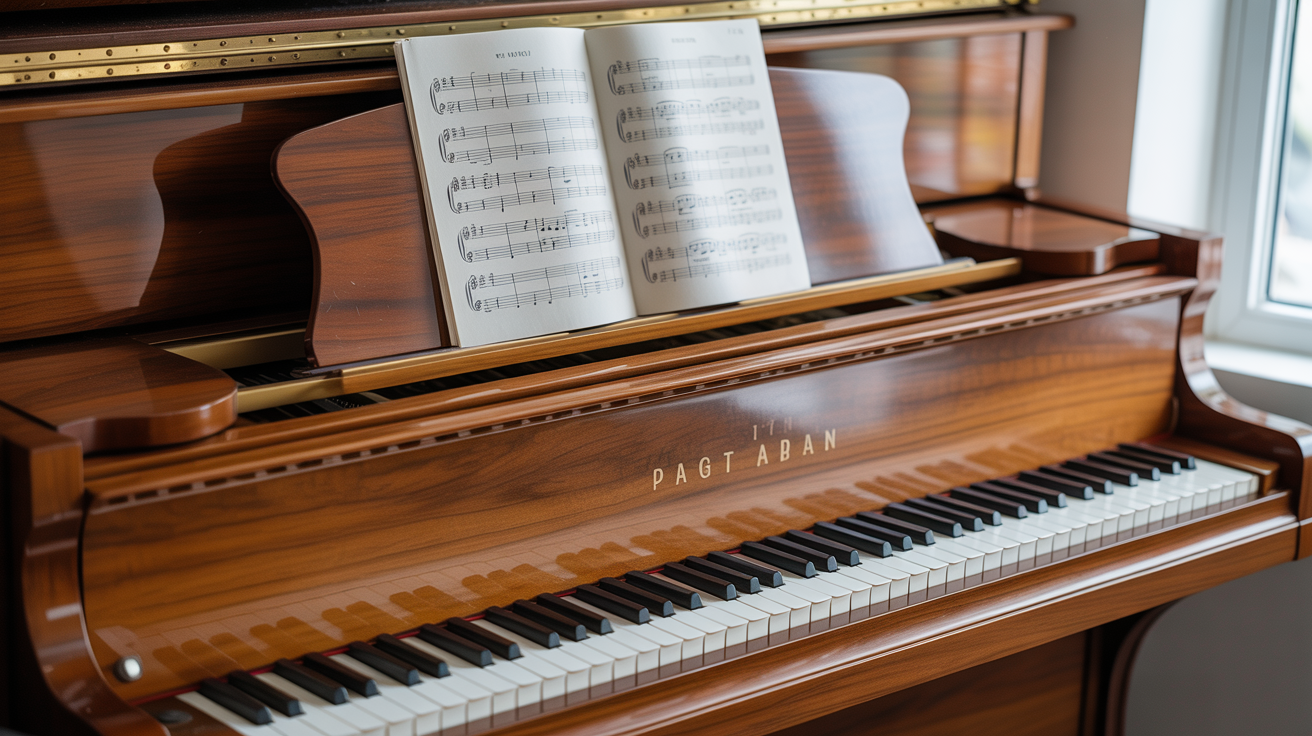
Sight-reading is the skill of playing a piece of music the first time you see it, without preparation. Most beginners avoid it because it feels overwhelming, but the truth is that it gets easier the moment you treat it as a separate, trainable skill. Here is a practical guide to getting started.
At a Glance
- Sight-reading rewards continuity over accuracy: a slow, unbroken run-through teaches you more than a fast one full of stops.
- Do a 30-second scan (key signature, time signature, tempo, tricky spots) before you play a single note.
- Skilled sight-readers read ahead of where their hands are playing, a gap researchers call the eye-hand span.
- Reading new music every session builds the skill; replaying familiar pieces builds memorization instead.
- A one-hand read-through, treble alone, then bass alone, isolates weaknesses that hide when both hands play together.
- Set your tempo to whatever lets you avoid stopping more than twice; if you stopped more, halve the speed.
What Sight-Reading Actually Is (and Is Not)
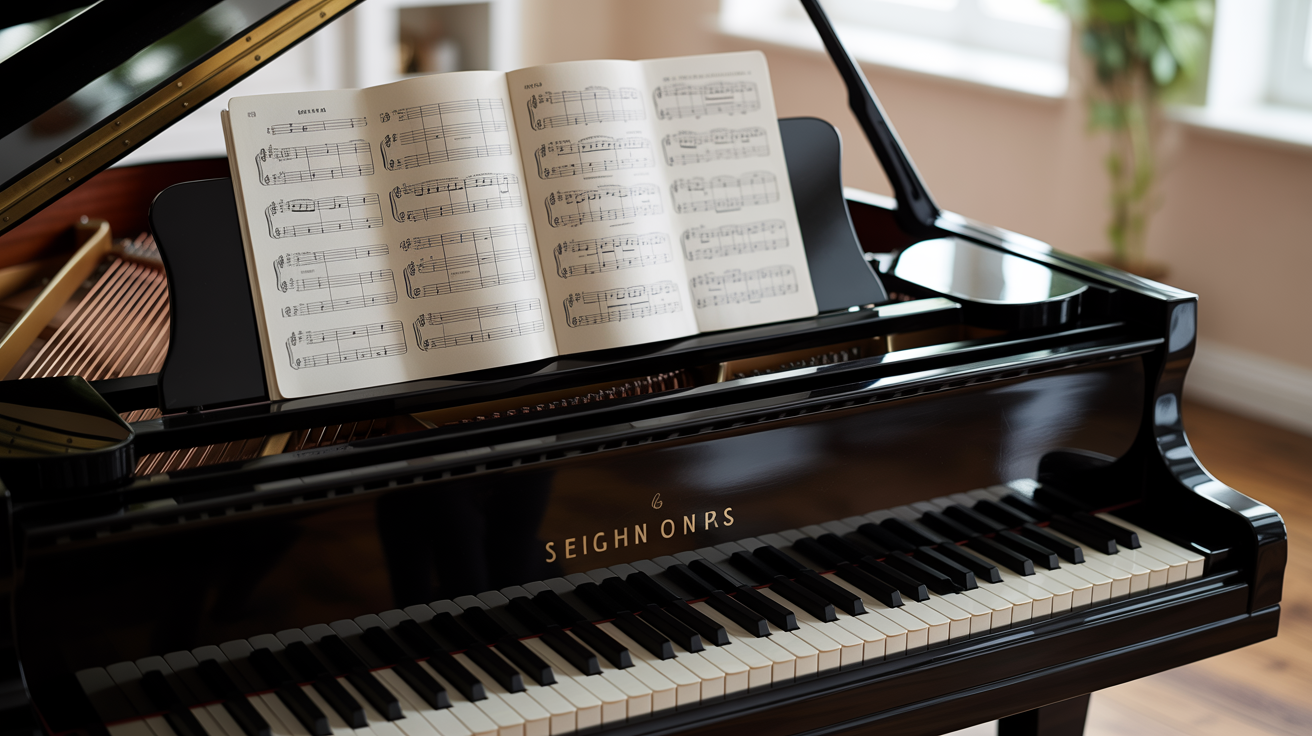
Sight-reading is not about playing perfectly. It is about keeping the pulse going while translating notation into keystrokes in real time. In musical terms, sight-reading (also called prima vista) is defined as reading and performing a piece of notation the performer has not seen or learned before. Your eyes are always ahead of your fingers, reading what is coming next while your hands play what you just looked at.
That mental split takes practice. Researchers who track this with eye-tracking equipment call the gap between where a musician's eyes are looking and what their hands are currently playing the "eye-hand span," and it is the main reason experienced sight-readers look at a piece of music rather than their hands; they have built a physical map of the keyboard so their fingers find the notes without constant visual confirmation.
If you are still building that map, start with how to read sheet music for piano and make sure you are comfortable identifying notes on both the treble clef and bass clef before adding the pressure of real-time reading.
Before You Play: The 30-Second Scan
The single most effective sight-reading habit costs you nothing except 30 seconds before you touch a key. Look through the music before you play it:
- Key signature. Which sharps or flats apply to every note? You want this in your fingers before you begin, not discovered mid-phrase.
- Time signature. Is it 4/4, 3/4, 6/8? Count two silent bars at your target tempo so the pulse is established in your body.
- Tempo and feel markings. Words like Andante or Allegro give you a speed range. For sight-reading, always choose the slower end.
- Tricky spots. Scan for ledger lines, accidentals, large leaps, or rhythms that look complex. Note them so they do not surprise you.
- Phrase shapes. You do not need to analyse the structure in depth. Just notice where phrases start and end so your phrasing feels intentional rather than accidental.
This scan is not optional practice; it is what experienced sight-readers do every time.
Start Slower Than You Think You Should
The most common beginner mistake is starting at a tempo you cannot sustain. You make it through the first two bars and then freeze on a difficult chord.
Pick a tempo where you can read and play every note without stopping. If that tempo is very slow, that is fine. The goal of a sight-read is continuity; a stumbling, halting attempt gives you nothing useful. A slow, complete run-through gives you real information about what you actually know.
A simple rule: if you had to stop more than twice in a run-through, halve your tempo.
Using a Metronome for Sight-Reading
Set a metronome to a tempo that feels almost too easy, then start. If you miss a note, leave it and keep going. If you lose your place, find the next downbeat and re-enter there. Do not go back and fix things mid-read.
After the run-through, you can work on trouble spots in isolation. But the sight-reading pass should be uninterrupted.
Reading Notes on the Grand Staff
Sight-reading fluency depends on how quickly you recognise notes, and that speed comes from pattern recognition rather than calculating each note from scratch. Interestingly, research on skilled pianists suggests the eye-hand span itself is not a fixed marker of talent; one study measuring 30 professional pianists found that eye-hand span functions as a flexible strategy rather than a raw indicator of skill, with players widening or narrowing the gap depending on how difficult the passage was. That is encouraging for beginners: the gap grows as a byproduct of accumulated reading practice, not as a talent ceiling you either have or don't.
Two approaches work together:
Landmark notes. Memorise a handful of anchor notes and read everything else relative to them. Middle C, the G above middle C, the C above the staff in treble clef, bass clef F on the fourth line. From any anchor, you can count up or down by steps.
Interval recognition. When you see a skip, identify the interval rather than the two individual notes. A third is two notes that sit on adjacent lines, or adjacent spaces. A fifth spans one line and two spaces. Recognising intervals by shape is faster than reading each pitch individually.
You can review how to read notes on the grand staff for a full breakdown of lines and spaces in both clefs.
A Quick Reference for Common Landmarks
Treble clef landmarks:
  E (below staff)  - just below first line
  G (second line)  - the clef curls around it
  B (middle line)  - third line
  D (fourth space) - fourth space
  F (top line)     - fifth line

Bass clef landmarks:
  G (second line from bottom) - below the two dots
  B (middle line)
  F (fourth line)  - the two dots sit around it
Work on these until recognition is immediate. Flashcard apps and note-reading drill books both help; aim for five minutes per day rather than one long session per week.
Landmark recall speed as you practice
Give yourself a simple benchmark for progress. Time how long it takes to name 20 random landmark notes flashed one at a time, and retest every couple of weeks:
| Stage | Typical time per note | What it feels like |
|---|---|---|
| Just starting | 3-5 seconds | Counting lines and spaces from a known anchor each time |
| After 2-3 weeks of daily drills | 1-2 seconds | Most landmarks recognized instantly, a few still need counting |
| After 6-8 weeks | Under 1 second | Recognition feels automatic, freeing attention for rhythm |
If your times are not dropping after a few weeks of consistent five-minute drills, shrink your landmark set rather than expanding it. Five rock-solid anchors beat fifteen shaky ones.
Practical Drills That Actually Build the Skill
Sight-reading improves from volume. Reading the same pieces repeatedly does not build sight-reading; it builds memorisation. You need new music regularly.
| Drill | How to do it | Frequency |
|---|---|---|
| One-hand read-through | Sight-read the treble line alone, then the bass line alone | Daily |
| Slow full read | Play hands together at half your comfortable tempo | Daily |
| New piece each session | Grab a beginner book you have never opened and read through one page | 3-4x per week |
| Rhythm-only pass | Clap or tap the rhythm before touching keys | When a rhythm is tricky |
| Transposition drill | After a successful read-through, try the same passage one step higher | Weekly |
The one-hand pass is underused by beginners. Your eyes and ears can focus entirely on rhythm and pitch without coordinating two hands at once. It reveals weaknesses that disappear in the chaos of hands-together playing.
Common Problems and How to Fix Them
You keep looking at your hands. This is normal early on but worth breaking deliberately. Choose one short phrase, mark the first note, close your eyes briefly, find the starting position, then open your eyes and keep them on the music. Over time your hands develop positional memory.
You lose the beat when both hands play together. Your right hand is probably ahead of your left, or vice versa. Try this: play only the beats (quarter notes) in both hands, leaving out all the passing notes. Once you can lock the hands together rhythmically, add the detail back.
Ledger lines stall you. Ledger lines above the treble staff are the most common sticking point. Memorise three: middle C (one ledger line below treble), A above the staff (two ledger lines above), and high C (three ledger lines above). Everything else is a step or two away from one of those.
You stop when you make a mistake. This is a mental habit as much as a musical one. Give yourself permission to play through errors during sight-reading practice. Stopping to correct is practising note-learning, not sight-reading.
Frequently Asked Questions
How long does it take to get decent at piano sight reading for beginners?
With 10 to 15 minutes of daily practice on new material, most beginners notice real improvement within six to eight weeks. The first gains are usually speed of note recognition, followed by smoother rhythm. Fluency at any level takes consistent exposure to new music over months.
What level of music should I use to improve sight reading?
Use music one full grade below your current playing level. If you can play Grade 2 pieces cleanly after practising them, sight-read Grade 1 material. Using easier music lets you focus on keeping the tempo and reading ahead rather than decoding every bar.
Should I learn both hands separately before sight-reading hands together?
For sight-reading specifically, yes. Do a one-hand pass on each hand first, then attempt both hands together. The hands-together read will be cleaner and you will learn more from it.
Can I use a metronome while sight-reading?
Yes, and it is recommended. The metronome enforces continuity; you cannot stop to fix things because the beat keeps going. Set it slower than you think you need and keep going no matter what.
Is sight-reading different from just learning a piece?
Completely different. Learning a piece involves repetition, correction, and memorisation. Sight-reading is a one-pass skill where continuity matters more than accuracy. The two skills reinforce each other, but you need to practise sight-reading separately, using music you have never seen before.
Does a bigger eye-hand span automatically mean better sight-reading?
No, and this trips up a lot of self-taught players who assume they need to stare far ahead at all times. Research measuring professional pianists found that the most proficient readers adjusted their eye-hand span up or down depending on the difficulty of the passage, rather than maintaining one fixed distance. The skill is flexibility, not maximum distance. If a passage gets harder, it is normal and correct for your eyes to sit closer to your hands until it eases up again.