Getting Started
Can You Teach Yourself Piano? Self-Teaching vs Lessons
Yes, you can teach yourself piano. This guide explains what self-teaching covers well, where lessons help, and how to decide what suits your goals.
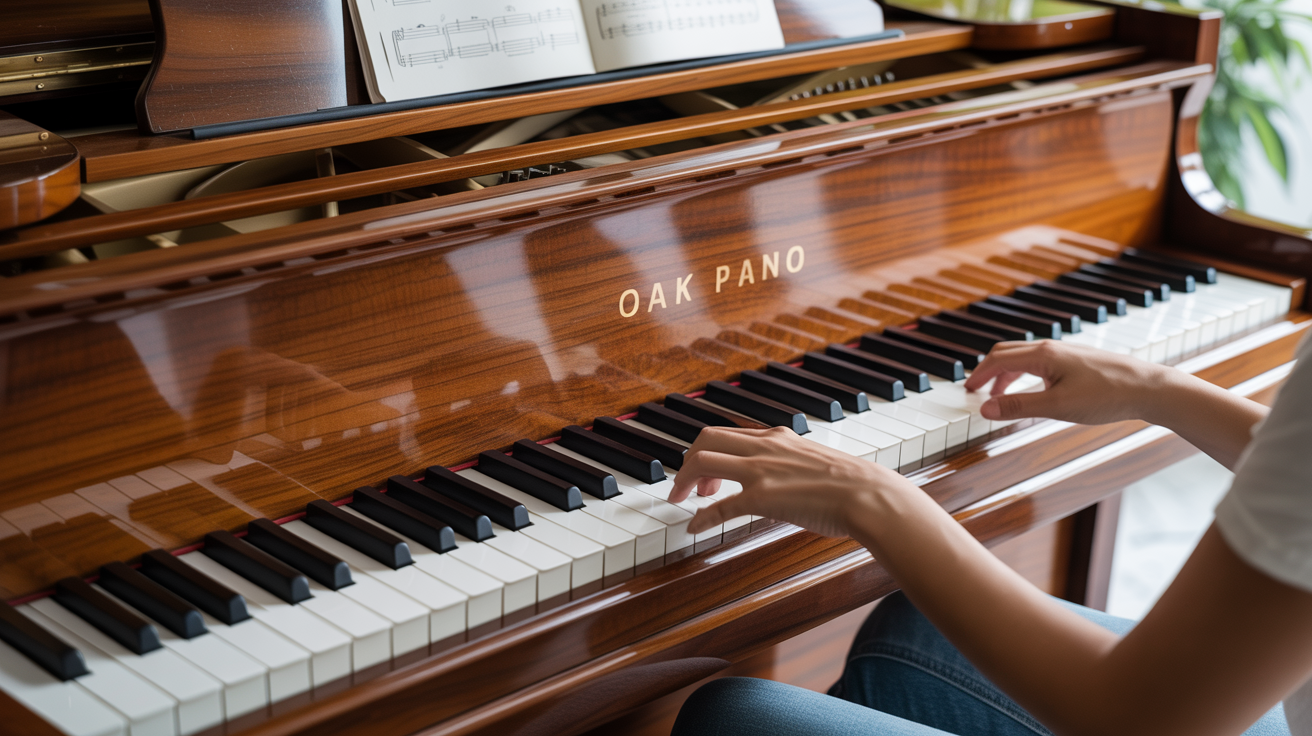
Yes, you can teach yourself piano. Plenty of people do it successfully. The honest answer is that it depends on what you want to play, how much time you have, and how you learn. Some goals are very achievable without a teacher. Others move faster with one. This guide walks through what self-study actually covers, where lessons add something real, and how to figure out which path makes sense for you.
At a Glance
- Self-teaching covers note names, basic chords, and simple reading well; it struggles with hand technique you can't see in a mirror.
- A meta-analysis of music performance research found structured practice explains a meaningful share of skill differences between players, but it is not the whole story.
- Teachers add the most value by watching your hands in real time and catching tension before it becomes a habit.
- Most adult hobbyists blend both: self-teach the basics, then book targeted lessons when they hit a wall.
- Twenty minutes a day, five days a week, beats ninety minutes twice a week for building muscle memory.
- Pain is never normal; stop and check your hand position if something hurts rather than pushing through.
What Self-Teaching Covers Well
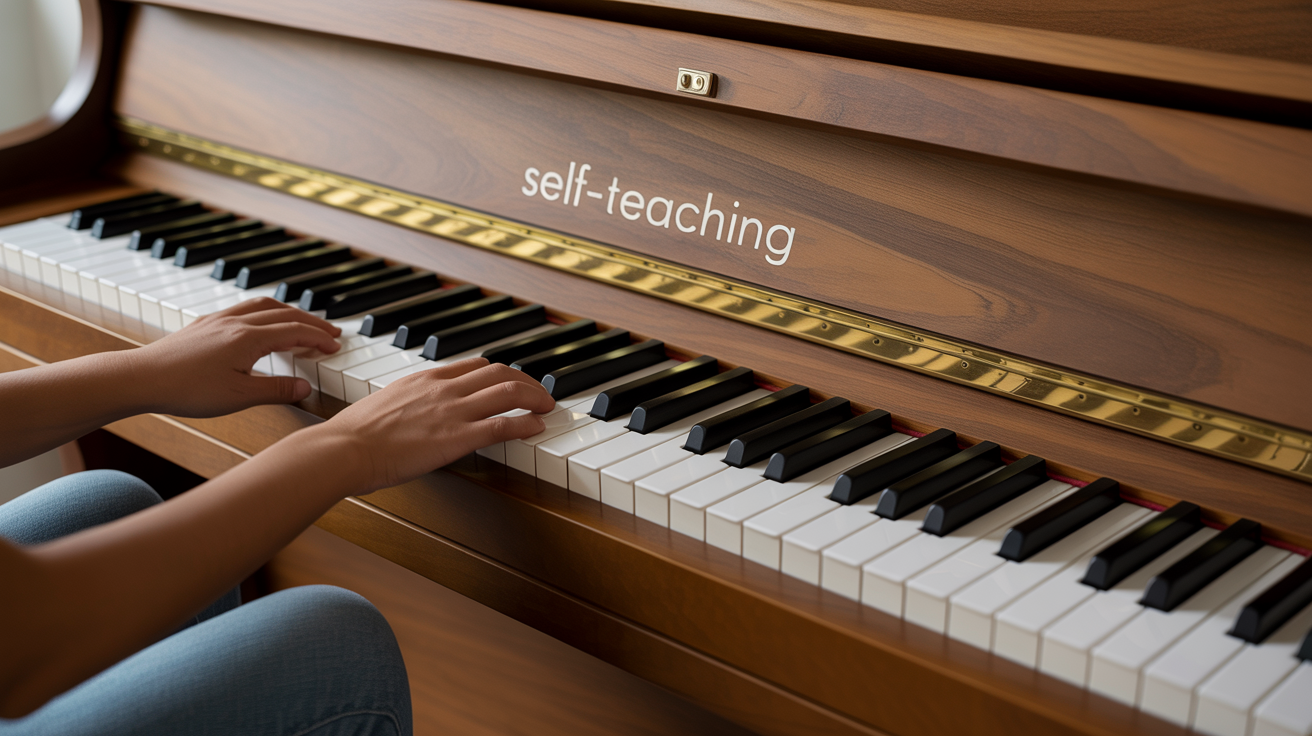
Self-taught piano has improved a lot in the past decade. Free and low-cost resources now cover territory that once required a teacher to unlock. Learning independently, or autodidacticism, has a long track record outside music too, but it tends to work best when the learner brings self-discipline and honest self-assessment to the process, both of which matter just as much at the piano.
Learning note names and the keyboard layout is completely doable on your own. The pattern of black and white keys repeats, and most beginners pick it up in a few sessions. Getting a solid start here pays off quickly.
Basic chords and chord progressions are well-documented in books, apps, and video tutorials. If you want to play pop, folk, or simple accompaniment, self-teaching can take you a long way.
Reading simple music at a slow pace is also learnable independently. Treble clef tends to click faster than bass clef for most beginners, but both are findable with consistent practice.
Learning specific songs you already know is probably where self-teaching shines most. When you have a target piece in your head, you have a reference for what "correct" sounds like. That feedback loop matters.
Where self-teaching gets harder is in anything related to physical technique. Bad habits in hand position, wrist tension, or fingering are easy to develop and hard to notice on your own, because they often feel fine until they cause a problem.
Where Lessons Add Real Value
A teacher does several things that no app or video can fully replicate.
The main one is watching your hands. A lot of tension in piano playing is invisible in the mirror and inaudible in the recording. A teacher can see your wrist dropping, your thumb tucking too early, or your elbow drifting inward, and correct it before it becomes ingrained.
Teachers also sequence material in a way that accounts for your specific gaps. A video course moves everyone through the same order; a teacher adjusts. If your left hand is two weeks behind your right, a teacher can address that directly.
Lessons also create accountability. For some people, the knowledge that they will sit across from someone on Thursday is the thing that gets them to the bench on Wednesday.
That said, lessons are expensive and not always available. They are not required to enjoy the piano or to reach a meaningful level. Research backs up the middle ground here: a large meta-analysis of skill-acquisition studies across music, sports, and other domains found that structured, goal-directed practice explained roughly 21 percent of the variance in musical performance between individuals. That is a real, measurable effect, but it also means how you structure your own practice time (self-taught or not) matters more than whether a teacher is physically present.
A Realistic Comparison
Here is a practical breakdown of the two approaches:
| Self-Teaching | With a Teacher | |
|---|---|---|
| Cost | Low to moderate (apps, books, courses) | Higher per month |
| Schedule | Fully flexible | Fixed lesson times |
| Hand technique | Hard to self-monitor | Corrected in real time |
| Song choice | You pick everything | Teacher may guide choices |
| Pacing | Set your own | Adjusted to your gaps |
| Accountability | Comes from within | Built into the schedule |
| Best for | Songs, chords, casual playing | Building solid long-term technique |
Most adults who learn as a hobby land somewhere in the middle. They self-teach through basic material, then pick up occasional lessons when they hit a wall or want to refine something specific.
A typical self-taught timeline
Progress varies a lot by how much structure you bring to practice, but here is a realistic shape for an adult beginner practicing 20 to 30 minutes most days:
| Timeframe | What a self-taught beginner can usually do |
|---|---|
| Weeks 1-2 | Name keys, sit with correct posture, play a five-finger position hands separately |
| Weeks 3-6 | Play a simple two-hand piece slowly, read a few lines of sheet music |
| Weeks 7-12 | Hold 2-3 basic chords, switch between them, play a recognizable simplified song |
| Months 4-6 | Play several short pieces from memory, read new simple music at a slow tempo |
| Months 6-12 | Notice technique plateaus (tension, uneven hands) that are hard to self-diagnose |
That last row is exactly where most self-taught players decide whether to bring in a teacher for a stretch.
How to Self-Teach Effectively
If you decide to learn without lessons, structure matters more than it does with a teacher, because no one is setting it for you.
Get the right instrument first. Not everything marketed as a keyboard gives you the experience you need to build technique. Choosing between a digital piano, keyboard, and acoustic affects how your fingers develop. Weighted keys in particular make a difference when you eventually want to control dynamics.
Key count also matters more than beginners expect. If you start on a 49-key mini keyboard, you will hit the edge of the instrument before you hit the edge of your ability. Understanding what 61, 76, and 88 keys each get you is worth doing early.
Practice short sessions more often rather than long sessions rarely. Twenty minutes a day five days a week outperforms ninety minutes twice a week for most beginners. Muscle memory builds through repetition spread across time, not through cramming.
Record yourself. Phone audio is enough. Playing back a recording reveals things your ears miss in the moment, like rushed tempo or uneven dynamics between hands. It is an imperfect substitute for a teacher's ears, but it is much better than nothing.
Work hands separately before hands together. This is the step most self-teachers skip because it feels slow. It is not slow. It is the thing that makes hands-together practice actually work.
Stop if something hurts. Piano should not cause pain. Tightness and fatigue are normal early on; sharp or persistent pain is not. Rest and check your hand position before continuing. If pain recurs across sessions even after resting, that is a signal worth taking to a teacher or a hand specialist rather than pushing through on your own.
Signs You Would Benefit from Lessons
You do not have to choose one approach for the entire time you play. Many self-taught players bring in a teacher at specific moments:
- Your hands feel tense but you cannot figure out why
- You have been stuck on the same passage for weeks
- You want to play classical repertoire where fingering and pedaling are part of the piece
- You are preparing for a performance or exam
- You feel like something is wrong but cannot name it
- Your progress has plateaued for a month or more despite consistent practice
Even one or two lessons targeting a specific problem can unstick a self-taught player who has hit a wall.
Frequently Asked Questions
Can self-taught piano players reach an advanced level?
Some do, but it takes longer without feedback on technique. Most self-taught players who reach a high level either had a strong natural feel for hand position, worked very carefully with recordings and mirrors, or eventually brought in a teacher for stretches when technique became the limiting factor. Advanced classical playing in particular is very hard to achieve without instruction at some point.
Do I need to learn to read music to teach myself piano?
You can learn to play without reading notation, especially for chords and pop songs. But learning to read, even slowly, opens up a much larger library of material and makes learning new pieces faster over time. It is not a requirement for enjoying the instrument; it is a tool that pays off later.
What is the best app for learning piano without lessons?
Several apps are widely used, including Playground Sessions, Simply Piano, and Flowkey. Each has a different approach. The best one depends on whether you want to focus on songs, theory, or structured technique. Trying free trials before committing is sensible. Apps are not a substitute for good technique feedback, but they are effective for ear training, rhythm, and building a song repertoire.
How long does it take to play something recognizable without lessons?
Most beginners can play a simple piece with two hands in four to eight weeks of regular practice. "Recognizable" might mean a simplified version of a song, not a full arrangement. Progress depends heavily on how often you sit at the instrument and how structured your practice time is, not just on total hours logged.
Is there an age where self-teaching becomes harder?
Adult beginners sometimes worry that they have waited too long. They have not. Adults learn differently than children. They tend to have less daily practice time but more patience, better focus, and stronger ability to understand theory. The main disadvantage is that adult hands are fully formed, so developing finger independence takes consistent work. None of this makes self-teaching impractical.
How much of piano skill actually comes down to practice versus natural talent?
More than most beginners assume, though not all of it. The meta-analysis referenced above found deliberate, structured practice accounts for around a fifth of the difference in musical performance between people, with the rest split between starting age, quality of instruction or self-instruction, and individual variation. In practice, that means how you practice (focused, hands-separate, short daily sessions) matters more than whether you were "born musical."